AI lead qualification for home-service businesses, measured
 by Parvez Zoha
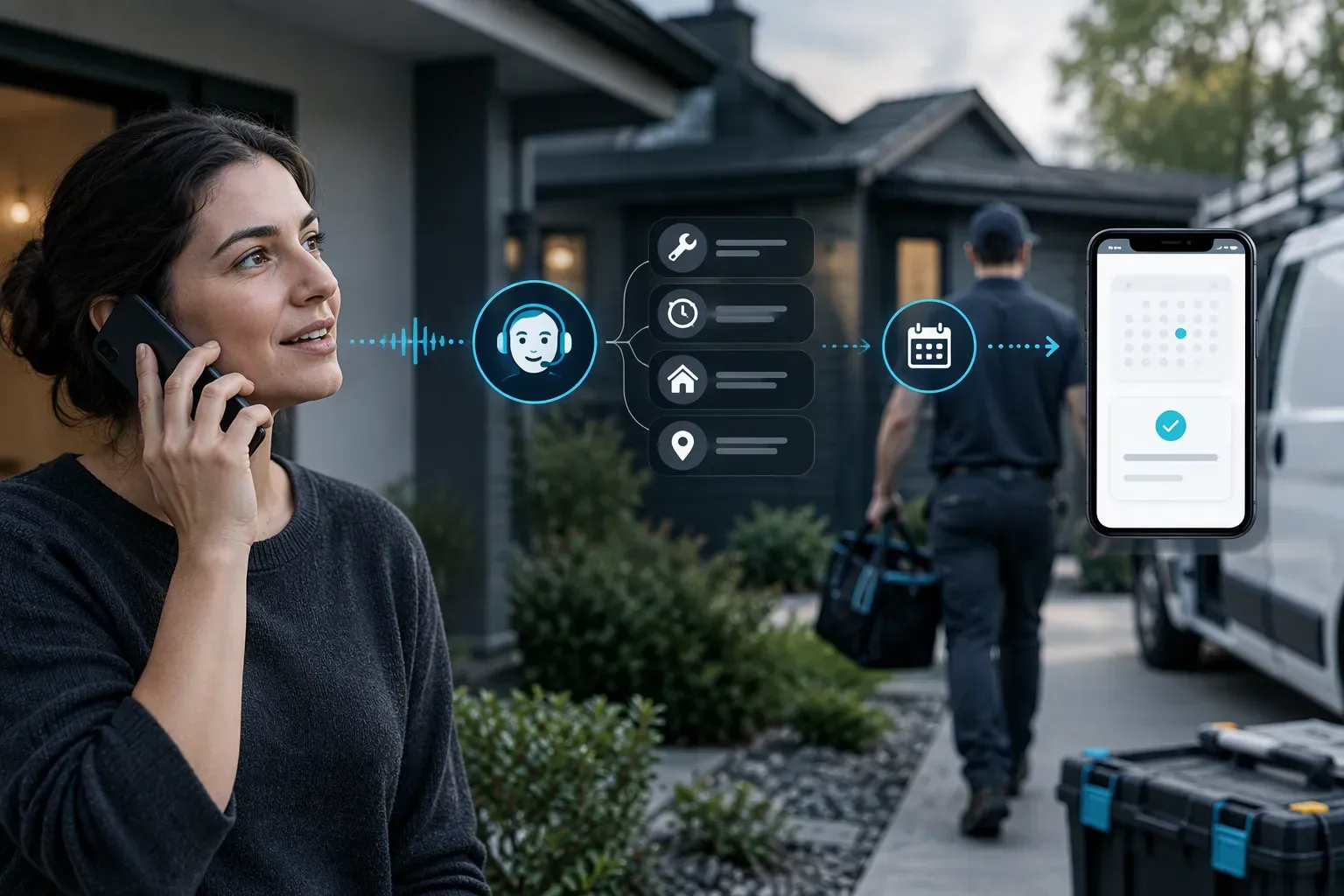
AI lead qualification for home-service businesses captures a new service enquiry, asks what work is needed, how urgent it is, what kind of property is involved, and where it is located. It can then book an estimate on a connected calendar or route the request to the right person, so a missed call does not have to end the conversation.
Key takeaways
- Capture the requested service, urgency, property context, address, and next step.
- Novacall AI responds to inbound leads in under 60 seconds, qualifies callers on the call, and supports booking on a connected calendar.
- Keep emergencies, out-of-scope requests, and unclear cases out of automatic estimate booking until your business rules define the right handoff.
- Qualification gathers details and checks fit; scoring ranks leads. They answer different questions.
- Use AI for repeatable intake while people handle diagnosis, unusual jobs, and judgment calls.
What should a qualified home-service lead include?
Qualification is not a long interview. It is the information your team needs to choose a next step without guessing. For a new service enquiry, start with the job the caller needs done. Then establish urgency, property type, and service address. If the caller does not know an answer, record it as unknown rather than filling the gap with an assumption.
Start with details that change the next step
In practice, callers may describe a symptom before giving an address. An intake flow should let them explain the job first, then confirm the location before an estimate is scheduled. That order helps your team understand what kind of appointment the caller needs without making location questions feel like a barrier to explaining the problem.
Make the record useful for the person who handles the lead next. A dispatcher needs to know whether the request is urgent and whether it fits your service area. An estimator needs the service category and property context. If someone else approves work, the team may also need to know who is making the request and who can authorize an estimate.
Ask only what helps staff act
A question belongs in the intake when its answer can affect routing, booking, or preparation. A question that does not change the next step may add effort without making the handoff more useful. Keep prompts clear and use the words callers are likely to use; avoid forcing them to choose between technical categories they may not recognize.
Seenonmain.com Home-Service Lead Response SeenOnMain describes a readiness score built around digital intake, after-hours signals, response-time signals, lead-qualification depth, and multi-channel reach (2026 Home-Service Lead Response Report). For your own process, treat those areas as a checklist, not as proof that a particular tool will increase bookings.
Customerflows.com Home Service Business Statistics says its resource covers contractor lead response, CRM adoption, job values by trade, WhatsApp usage, and AI qualification rates (Home Service Business Statistics 2026: Benchmarks and Data). Those are areas a business might investigate, but a benchmark does not tell you whether a specific enquiry fits your crew.
Why manual lead qualification loses detail
Manual intake gives staff room to show empathy and ask follow-up questions. It also depends on someone being available, knowing the current service rules, and recording the answer where the next person can find it. When calls arrive while the office is busy, a rushed note can miss the requested service, urgency, or next step.
AI lead qualification for home-service businesses is not a replacement for a dispatcher. It gives repeatable intake a clear structure, while staff retain responsibility for judgment and exceptions. A consistent question flow also makes it easier to spot missing information before the office books an estimate or sends a request to a technician.
According to Gitnux.org Ai Home Service Industry, by the end of 2023, 45% of US home service businesses had adopted AI tools, up from 28% in 2022 (AI in the Home Service Industry Statistics). Those figures describe reported AI adoption, not the results a particular company gets from AI lead intake.
Wifitalents.com Ai Home Service Industry reports that 48% of HVAC businesses use AI-powered chatbots for after-hours inquiries (AI in the Home Service Industry Statistics 2026). Chatbot use is not the same as qualifying a phone enquiry, booking an estimate, or showing that a missed call became revenue.
Businessinsurance.com Do Contractors Get Leads says Profit Acuity released a report examining how contractors and home-service businesses generate leads (How Do Contractors Get Leads? Referrals, Search & AI Report Released). Whatever the lead source, your intake still needs a clear rule for checking fit and deciding what happens next.
Keep the caller’s words separate from a diagnosis
When I review a test call, I listen for the distinction between what a caller reports and what the system concludes. If a caller says the ceiling is wet, I want the record to preserve the reported symptom and urgency—not turn that account into an AI diagnosis of the cause. That is a useful single-call check: can the next person see what the caller actually said and what still needs investigation?
A practical test should also reveal whether the flow asks for details in a way a caller can answer. If someone cannot provide an address yet, the record should show that the detail is missing rather than imply it has been confirmed. The point is not to collect every possible fact; it is to avoid a handoff that hides uncertainty.
What AI lead qualification for home-service businesses does
A voice workflow can answer an inbound enquiry, ask set qualification questions, and support follow-up through channels the business uses. Novacall AI responds to inbound leads in under 60 seconds.
Novacall AI operates 24/7/365.
Novacall AI supports voice, SMS, email, and WhatsApp workflows.
Novacall AI can qualify budget, timeline, property or job type, and pre-approval status during a call.
For home services, job type and timeline help frame the requested work and urgency. They do not establish whether a job is safe, whether the caller’s description is technically correct, or what work a technician will recommend. The record should reflect what the caller reports and leave professional assessment to the appropriate person.
Novacall AI supports automatic appointment booking on a connected calendar.
Novacall AI also supports CRM integration. Every plan includes multi-channel follow-up, CRM integration, and calendar booking. Plans are tiered by daily call volume; higher tiers include more voice minutes, more concurrent calls, and more AI agents.
According to Osforyour.business AI Adoption Home Services, among businesses using AI tools, dispatching AI and automated scheduling have adoption rates of 78% and 71%, respectively (AI Adoption in Home Services). These figures describe tool adoption, not measured lead conversion or proof that the same workflow fits every shop.
Make the handoff usable
An intake record should make the next action visible. Staff should be able to tell what service was requested, what the caller said about urgency, which property details were supplied, and whether the enquiry is booked or waiting for review. If a detail is missing, mark it as something to confirm rather than leaving the next person to infer what happened.
AI cannot inspect a furnace, confirm a hidden leak, or judge the full scope of damage by phone. A technician still decides the diagnosis and estimate. Set expectations with callers accordingly: the workflow can gather details and arrange a next step, but it should not imply that an estimate or diagnosis has already been established.
How should AI lead qualification for home-service businesses route each call?
Set decision rules before automating the questions. A practical workflow checks whether you offer the service, establishes urgency and property details, then selects estimate booking or human review. Booking should not be the default when key information is missing.
Use a rule for each kind of request:
- If the request is for a service you offer and the caller wants an estimate, collect the required details and use the connected calendar for booking.
- If it is urgent, follow your written emergency process and route it to the person responsible for that work.
- If you do not offer the service, do not promise an appointment. Record the request and direct it to the office for review.
- If the address, property type, or authority to approve work is unclear, flag what needs confirmation before the team commits to an estimate.
A shared view of the handoff helps staff compare the options:
| Intake approach | What it does well | What the business must manage |
|---|---|---|
| Manual office intake | Gives staff room to respond to nuance and ask follow-up questions | Coverage when staff are busy and consistent note-taking |
| AI-supported intake | Asks repeatable questions and supports connected-calendar booking | Clear service rules, calendar checks, and human handling for exceptions |
| Human review | Handles unusual scope, safety concerns, and judgment calls | A clear route from the intake record to the right person |
Separate property details from authority
Do not let a building label stand in for the caller’s role. A property manager, tenant, or homeowner can describe the same job but have different authority to approve work. Ask who is calling and whether the property is residential or commercial. Confirm which details your team needs before booking an estimate.
Consider what staff should do when an answer is incomplete or conflicts with another detail. For example, a caller may describe a commercial property while requesting a service your business only offers for residential customers. That should trigger a review rule, not an automatic assumption that the request fits. Keep the record clear about which information came from the caller and which decision remains with staff.
Set up the workflow without breaking your front desk
Treat AI lead qualification for home-service businesses as a front-door process that follows your existing service rules. Write down the services you offer, where you work, how you define urgent requests, what details an estimator needs, and which cases always go to a person. Keep the language close to the terms your callers use.
Document the rules before configuring questions
Start with your service list and coverage boundaries. For each service category, note what makes a request suitable for an estimate, what details staff need first, and what should stop automatic booking. Write emergency instructions in plain language and identify the person or process responsible for those enquiries.
Also decide what the workflow should say when it cannot establish fit. A safe response may be to record the request and tell the caller that the office will review it. Avoid promising an appointment, a specific response time from staff, or a particular result unless your business has approved that language and can follow through.
Connect the record to the work
Decide where the information belongs. Confirm which fields your team needs in the CRM and how staff will see an incomplete or out-of-scope request. Connect the calendar you use for estimates, then check whether the appointment rules match actual availability. Ask the vendor to show how the workflow handles a booking that does not fit those rules.
Consider what happens after booking as well as during intake. Who checks the record? Who contacts a caller if an important detail is missing? If a booking needs to be changed, staff should know how to update the calendar and keep the caller informed. A clear owner for these tasks prevents an automated handoff from becoming an unowned task.
Test ordinary calls and exceptions
Test calls should cover more than a routine request. Include an urgent problem, a service you do not offer, a missing address, a commercial property, and a caller who cannot book during the available calendar times. Check that each example leads to the intended booking or handoff, and that the CRM record reflects what was said. Keep your existing office process available until the team has checked those paths.
When I test a call flow, I also listen for whether a caller can correct an answer or explain that they are unsure. A rigid sequence can collect a technically complete form while still leaving the caller confused. Review the call experience and the staff handoff together: the questions should make sense to the caller, and the resulting record should be useful to the person taking over.
Seasonal demand needs its own plan. During a heating or cooling rush, decide who handles urgent enquiries, how overflow reaches staff, and what callers hear when no estimate slot fits. Higher Novacall AI tiers include more concurrent calls and more AI agents, so discuss your expected peak pattern when choosing a tier. A test during a quiet period does not prove that the workflow fits a busy spell.
Check fit and cost with the vendor
Novacall AI pricing is quote-only. Ask for a quote on a short call and discuss your call workflow, plan tier, and calendar and CRM needs. Do not use an invented plan price or an assumed staff-cost comparison to judge fit. Instead, compare the workflow against your operational requirements: which enquiries it handles, how it flags exceptions, and whether the team can work with the handoff.
Measure the handoff, not a vanity score
To assess AI lead qualification for home-service businesses, track whether the process creates a useful next step, not just whether it answers. Review whether the requested service, urgency, property context, and address are complete. Then check whether the request was booked, sent for human review, or left waiting for information.
Review records for gaps and routing mistakes
Use your CRM and booking records to look for missing fields, duplicate appointments, requests assigned to the wrong person, and enquiries that did not receive the follow-up your rules require. If staff repeatedly have to ask callers to repeat basic details, identify whether the question was skipped, misunderstood, or not saved in a useful field.
Compare patterns over time using your own records. Keep the review practical: decide who checks the records, how staff report a routing issue, and how changes to service rules make their way into the workflow. Another company’s benchmark is not a substitute for understanding what happens to your enquiries.
Ask to review examples of the caller experience and staff handoff before committing to a workflow. If the result leaves the estimator asking the caller to repeat the basics, improve the questions or the way details are recorded. A good system makes the next action clear without pretending every enquiry is ready to book.
Questions home-service owners ask
Want to see what AI can do for your shop?
Use a walkthrough to test a real service request, not a generic script. Bring your service list, coverage rules, urgent-call policy, calendar needs, and CRM field names. Ask to see the caller experience and staff handoff so you can judge where human review belongs.
What if a lead requests a service type my company does not offer?
Do not book it as a service you do not perform. Set a rule to record the request, explain that office staff will review it, and route the detail to the right person. Keep the service list current so the workflow does not promise an estimate for an unsupported job.
Can customers still call my office to schedule?
Yes. Keep your office number and staff scheduling process available. Novacall AI supports inbound call workflows and booking on a connected calendar. Make sure staff and the automated workflow use the same availability and job rules to avoid conflicting appointment options.
How does it handle emergency versus routine service requests?
Define emergency triggers in plain language and route them to your on-call person or published emergency process. The AI should record reported symptoms and urgency, not diagnose a leak or tell callers a hazard is safe. Routine requests can follow the estimate-booking path when required details are present.
How long does it take to set up lead capture for my business?
Confirm the setup plan with Novacall AI after reviewing your service list, call rules, calendar, CRM connection, and test scenarios. Keep your current answering process available until the booking and handoff paths have been checked. Do not set a launch date based on an untested assumption.
Will the AI know the difference between a homeowner and a commercial property manager?
Ask whether the caller is a homeowner, tenant, or property manager, then establish whether the job is residential or commercial. Property type alone does not prove who can approve work. Save the caller’s answer for the estimator and route missing authority details for review.
What happens during seasonal demand spikes?
Set an overflow path before the rush: decide who handles urgent requests, where other enquiries go, and what callers hear when a suitable estimate slot is unavailable. Discuss expected concurrent-call needs with Novacall AI when reviewing plans. Choose a workflow based on your own peak pattern.
What is the difference between AI lead scoring and AI lead qualification?
Lead scoring ranks enquiries to help order follow-up. Lead qualification checks whether an enquiry includes the details your business needs and fits your service rules, then points to a next step. A high score does not fill a missing address or confirm that you offer the requested work.
Is AI lead qualification better than a human answering service?
Neither approach fits every call. Human staff bring judgment to unusual or sensitive conversations; AI qualification offers repeatable intake and connected-calendar booking. Use AI for defined questions and handoffs, and keep human coverage for emergencies, negotiation, and job scopes that need a person’s judgment.
How do I train AI to qualify leads for my business?
Start with written rules for services offered, service area, urgency definitions, property types, booking requirements, and reasons for human review. Test routine, out-of-area, emergency, and unsupported-job scenarios before launch. After your services or hours change, retest the questions, handoff, and calendar behavior.
The goal of AI lead qualification for home-service businesses is not to automate every conversation. It is to capture useful details, book suitable estimates, and get exceptions to a person without losing the enquiry. To see how the process could fit your shop, Book a discovery call.