AI missed-call response for med spas and aesthetic practices
 by Parvez Zoha
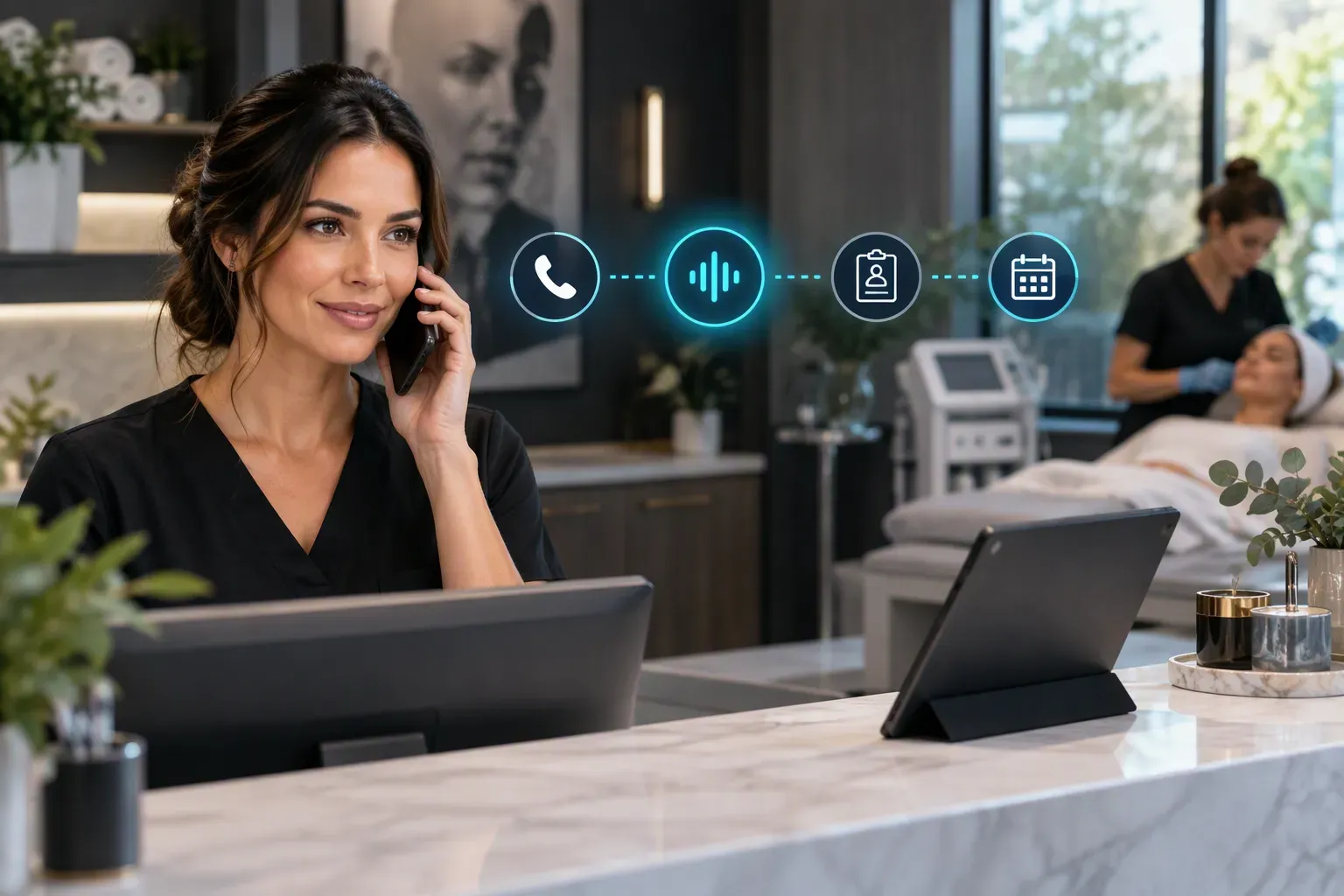
AI missed-call response for med spas and aesthetic practices gives every inbound enquiry a response in under 60 seconds, even outside staffed hours. Novacall AI uses voice and written follow-up, qualifies the request, connects the record to your CRM, and books on the connected calendar. Staff receive a cleaner handoff instead of a cold missed-call list.
AI Missed-Call Response for Med Spas and Aesthetic Practices
AI missed-call response for med spas and aesthetic practices captures treatment interest after an unanswered call, acknowledges the enquiry, asks practical intake questions, and moves the person toward a consultation or staff handoff. The workflow can continue by voice, SMS, email, or WhatsApp when the caller does not book immediately.
The value is not the automated message by itself. A useful workflow must preserve context, respect clinical boundaries, make booking straightforward, and give staff enough information to continue the relationship without making the caller repeat everything.
Key takeaways
- Respond to inbound treatment enquiries in under 60 seconds and maintain coverage outside staffed hours.
- Capture treatment interest, goals, availability, and contact details while the enquiry is active.
- Book consultations on the connected calendar instead of leaving staff with a callback list.
- Keep the enquiry connected to the CRM for a more useful handoff.
- Use AI for front-door coverage while trained staff retain clinical judgment and relationship ownership.
How AI missed-call response for med spas and aesthetic practices recovers enquiries
An unanswered call does not reveal whether the caller wanted pricing, availability, treatment information, or a consultation. It only shows that the front desk did not complete the initial exchange. Recovery starts with a prompt acknowledgement and ends with a clear next step.
The Publisher AI Receptionist Med Spas press release (release) describes an industry analysis of how missed calls and slow follow-up cost med spas thousands per month and presents AI-powered reception systems as a way to increase bookings without increasing payroll.
Those sources describe the problem at an industry level, but they do not establish what any particular practice will recover. The practical question for a buyer is therefore not whether automation guarantees more revenue. It is whether the practice can create a consistent response path, measure what happens next, and give staff ownership of the enquiries that need human attention.
In practice, the first useful question is usually about the treatment or consultation the caller wants. Making a person navigate a generic message or repeat a form submission adds friction at the moment they have already shown intent.
Start with the first useful response
Treat the recovery workflow as a service path. The system should acknowledge the enquiry, identify the practice, understand the request, collect the details staff need, and make booking easy. A generic text that only says someone will call back records the problem without helping solve it.
When I review a missed-call flow, I look for the point at which the caller has to do unnecessary work. If the first reply identifies the practice, asks what the caller needs, and offers a way to continue, the practice has a practical starting point. If it only announces that the call was missed, the workflow has created an alert rather than a recovery process.
The response should also set an appropriate boundary. It can explain that a trained team member will handle suitability questions, but it should not diagnose, promise a result, or imply that an automated exchange replaces a consultation.
The tone matters. A message that sounds like a sales blast may be poorly matched to someone asking about a sensitive treatment. A message that is too cautious may fail to offer any useful action. The strongest opening is concise, recognisable, and easy to answer.
Map the enquiry from response to resolution
A missed-call workflow should have an explicit definition of completion. Completion might mean a consultation is booked, a staff member receives an actionable handoff, or the caller is directed to an appropriate route for a question that cannot be handled automatically.
Do not define success as “message sent.” Delivery is only the beginning. Review whether the caller replied, whether the treatment request was understood, whether a suitable slot was offered, and whether staff knew what remained unresolved.
That evidence can help a practice decide which operational questions to ask, but a vendor should still explain its own measurement method. Ask how it identifies an inbound lead, how it records a recovered enquiry, and how it separates a booked consultation from a conversation that ended without a next step.
What happens after a missed treatment call?
A strong workflow moves the enquiry through clear stages without forcing the caller to repeat the same information.
| Stage | What the workflow should do |
|---|---|
| First response | Acknowledge the missed enquiry and identify the practice. |
| Conversation | Ask what treatment or consultation the caller wants and capture useful context. |
| Follow-up | Continue by voice, SMS, email, or WhatsApp when the caller does not book immediately. |
| Booking | Offer a suitable slot from the connected calendar and confirm the next step. |
| Handoff | Send relevant context to the CRM so staff can continue without starting cold. |
These capabilities should be configured as one connected journey rather than treated as separate features. The first response should refer to the missed enquiry, the qualification step should retain the treatment context, and the booking confirmation should make clear what happens next.
If the caller does not book, follow-up should continue according to the practice’s rules instead of creating an unowned task. The practice should decide which messages are appropriate, when to stop, and when a staff member should intervene.
Make the handoff the deliverable
In a workflow review, I want to see whether a caller can explain the treatment interest, provide availability, and reach a booking or staff handoff without starting over. The important output is not a long conversation. It is a concise operational summary that helps the team act.
A useful handoff can include the requested treatment, the caller’s stated goal, preferred timing, contact details, booking status, and any reason the conversation needs staff review. The practice should decide which fields are necessary before launch. Collecting information simply because the system can ask for it creates more cleanup and may make the exchange feel impersonal.
A CRM connection is valuable only when the receiving team knows how to use the information. Define the owner for new enquiries, the queue for complex questions, and the action expected after a handoff. Otherwise, automation may produce a better record without producing a better customer experience.
Novacall AI automatically books appointments on the connected calendar.Novacall AI integrates with a CRM.
Speed creates the chance to continue the conversation; qualification, booking, and CRM handoff turn that chance into an actionable enquiry.
How should AI qualify a consultation enquiry?
Qualification should feel like helpful intake, not an interrogation. The system needs enough context for staff to prepare without asking questions that belong in a clinical consultation.
The caller may explain the desired outcome before sharing every contact detail. Let the conversation follow that order, then confirm the details before ending the exchange. A natural sequence is to identify the requested treatment, understand the caller’s goal, ask about timing, capture contact information, and offer the appropriate next step.
Novacall AI qualifies callers during the call. Its qualification coverage includes budget, timeline, property or job type, and pre-approval status. For an aesthetic practice, the intake brief should also request treatment interest, goals, availability, and contact details where those fields are appropriate to the practice’s process.
The generic qualification fields should not be treated as a clinical screening protocol. A budget or timeline can help staff understand the enquiry, but neither field establishes whether a treatment is suitable. When a caller asks about contraindications, medication, side effects, diagnosis, or an expected result, the workflow should direct the question to trained staff.
Keep qualification non-clinical
The best qualification script is short enough to preserve trust and specific enough to support action. Avoid asking for sensitive information that the front desk does not need to book a consultation. Also avoid wording that makes a prospective patient believe the automated system has approved them for treatment.
When I test an intake flow, I introduce a question that should not receive an automated clinical answer. The correct behaviour is a clear explanation of the handoff, not a confident-sounding guess. I also check whether the caller can change direction, such as moving from a specific treatment question to a general consultation, without being trapped in the original route.
A practice should write approved language for common boundaries. For example, the system may explain that treatment suitability is assessed by a qualified member of the team and offer to arrange a consultation. It should not turn that explanation into a prediction about results.
The workflow should also recognise uncertainty. If the caller uses an unfamiliar treatment name, describes a concern outside the service list, or asks a question that the practice has not approved, escalation is safer than improvisation.
Use a practical intake brief
Before launch, separate information into three groups:
- Booking information: contact details, preferred appointment window, and the type of consultation requested.
- Preparation information: the caller’s stated goal and any non-clinical context the front desk needs.
- Escalation information: questions or circumstances that require a trained team member.
This structure keeps the conversation purposeful. It also helps the practice review whether each question has a clear reason. If a field does not support booking, preparation, routing, or escalation, it may not belong in the missed-call flow.
Novacall AI qualifies callers on the call using fields that include budget, timeline, property or job type, and pre-approval status.
Qualification works best when every question supports a booking decision, a staff handoff, or a safe escalation.
What should you look for in AI missed-call response for med spas and aesthetic practices?
The best AI tools for med spas are not necessarily the ones with the longest feature list. They are the ones that fit the practice’s call flow and leave staff with less reconstruction work.
Evaluate the workflow, not just the feature list
Look for these capabilities:
- Fast first response: The system responds to inbound leads in under 60 seconds and remains available through continuous operation.
- Multiple channels: Voice, SMS, email, and WhatsApp support help the practice continue the conversation in the channel that fits the enquiry.
- Useful qualification: The workflow captures the details staff need for treatment enquiries instead of collecting empty form fields.
- Calendar and CRM connection: Booking and lead context stay connected rather than sitting in separate tools.
- Capacity for demand: Novacall AI supports unlimited inbound calls.
- Consistent experience: Novacall AI delivers identical call quality on every call.
- Language coverage: Novacall AI supports 15+ languages.
- Operational controls: Same-day setup with no ramp period, SOC 2 compliance, and GDPR compliance belong in the buying conversation.
Novacall AI supports unlimited inbound calls.Novacall AI supports 15+ languages.Novacall AI delivers identical call quality on every call.
Language support does not remove the need for practice-specific review. A practice should check how treatment names, brand terms, accents, and escalation phrases are handled in the languages it plans to offer. It should also ensure that every language route uses current information about services, hours, booking rules, and staff ownership.
Test realistic call paths
A scripted demonstration can make almost any workflow appear simple. Ask to see realistic paths instead:
- A caller asks about a named treatment but is unsure whether to book.
- A caller wants a consultation outside the currently preferred appointment window.
- A caller asks a clinical question that requires staff review.
- A caller changes the treatment they are asking about.
- A caller replies by text after an initial voice interaction.
- A caller does not respond after receiving the first follow-up.
- A caller reaches the practice when the calendar has no suitable slot.
During these tests, I look for retained context. The system should not ask the caller to repeat the practice name, requested treatment, or preferred timing merely because the conversation changed channels.
I also check the staff view. A good handoff should show what the caller wanted, what was already answered, what was not answered, and what action the practice owns next. If staff must read a full transcript to discover the basic request, the workflow needs a better summary.
Use benchmarks as questions, not promises
Those figures should not be presented as a guarantee for Novacall AI or for a particular practice. Use them to ask what the vendor measures, how the practice will define a recovered enquiry, and which parts of the result depend on staffing, calendar availability, treatment demand, caller intent, or script quality.
A practice should establish its own baseline before changing the workflow. Review the current handling process, the time of day when calls are missed, the information staff need, and the reasons enquiries remain unresolved. The goal is not to select a flattering metric. The goal is to identify where the handoff breaks.
Understand pricing and plan structure
Novacall AI pricing is quote-only. Plans are tiered by daily call volume. Every plan includes multi-channel follow-up, CRM integration, and calendar booking. Higher tiers include more voice minutes, more concurrent calls, and more AI agents.
Because there is no published Novacall AI plan price, setup fee, overage rate, savings figure, ROI multiple, or payback period to rely on, ask for a quote based on the practice’s actual workflow. Explain the expected call pattern, preferred channels, calendar structure, CRM, languages, and escalation requirements.
A useful buying conversation should also cover what is included in implementation, how the practice changes scripts, who manages updates, how exceptions are routed, and how usage is reviewed. The cheapest-looking workflow is not necessarily the least expensive to operate if staff must repair unclear handoffs.
Novacall AI plans are tiered by daily call volume.
Compare the quote with the practice’s current missed-call process and operational requirements rather than relying on an invented payback model.
Can AI help med spas follow up with past patients?
Follow-up for a fresh inbound enquiry after a missed call is within scope. Past-patient reactivation is a separate marketing and care workflow with different consent, audience, and messaging requirements.
Novacall AI includes multi-channel follow-up for inbound workflows. That makes it useful when a new caller does not book during the initial conversation. A practice that contacts a past patient needs a separate plan for consent, treatment relevance, message frequency, and staff review.
Keep clinical questions and treatment decisions with trained staff. Automated outreach should support the relationship, not present a message as medical care or promise an outcome. The practice should also review whether a previous patient has opted out, whether the message remains relevant, and whether a staff member needs to approve the wording.
I separate these workflows during planning because their success criteria differ. Missed-call recovery asks whether a new enquiry received a useful response and a next step. Reactivation asks whether outreach is appropriate for that person and that context. Combining them can make reporting and consent management harder to interpret.
The CRM should also make the difference visible. New enquiries may require rapid routing to a consultation path, while past-patient campaigns may require a marketing owner, an approved audience, and different suppression rules. Reusing the same automation without distinguishing those purposes can create confusing records.
AI missed-call response for med spas and aesthetic practices is best treated as front-door follow-up for active enquiries, not as a replacement for patient marketing or care management.
How does AI reduce documentation time for aesthetic providers?
AI can reduce duplicate front-desk entry when qualification and booking connect to the CRM and calendar. It does not replace a provider’s clinical note, consent record, or medical judgment.
Novacall AI integrates with the CRM and books on the connected calendar. That gives the practice a connected starting point for the handoff. Staff can review the enquiry details, confirm the next action, and keep clinical documentation in the system required by the practice.
For AI missed-call response for med spas and aesthetic practices, the useful documentation target is the intake handoff: treatment interest, goals, availability, contact details, and booking status. Do not ask a receptionist system to diagnose, prescribe, or decide clinical suitability.
Define the information staff actually need
Before launch, write the handoff in plain language. If the front desk needs to know the requested treatment and preferred appointment window, make those fields explicit. If a question should always go to a provider, define that escalation rather than encouraging the system to improvise.
A useful handoff summary should answer practical questions:
- What prompted the caller to contact the practice?
- Which treatment or consultation did they mention?
- What outcome or concern did they state in their own words?
- What timing or availability did they express?
- Did they book, request a callback, or remain undecided?
- Is there a reason staff should review the conversation?
Avoid turning the summary into a clinical record by default. The practice should distinguish operational intake from clinical documentation and set permissions accordingly.
Limit access to information according to the practice’s privacy and governance requirements. Confirm retention, permissions, consent language, and regulatory obligations with the people responsible for compliance. SOC 2 and GDPR compliance are useful vendor considerations, but they do not remove the practice’s responsibility to configure and operate the workflow appropriately.
Keep records useful for the next person
A handoff fails when it contains activity but not meaning. “Caller contacted practice” is not enough for a receptionist who needs to decide what to do next. The summary should identify the request and the outstanding action without overstating what the caller said.
When I inspect a handoff, I compare it with the conversation that produced it. I look for missing treatment context, ambiguous booking status, and summaries that sound more certain than the caller was. The system should preserve uncertainty rather than converting a question into an apparent commitment.
Novacall AI connects inbound qualification and booking with CRM integration.
Automation reduces front-desk reconstruction work, while clinical documentation remains the provider’s responsibility.
How can AI analytics help a med spa grow?
Analytics helps a med spa see where enquiries stop: response, qualification, follow-up, or booking. The value comes from reviewing the workflow and changing the step that creates friction.
Novacall AI connects with the CRM and books on the connected calendar. Use those records to review fields such as:
- Whether the enquiry received a response.
- Whether treatment interest and contact details were captured.
- Whether the next step was a booking or a staff handoff.
- Which follow-up channel the caller used.
- Which routing rules required staff review.
- Whether staff had to correct or repeat information.
- Whether calendar availability prevented a suitable next step.
Do not treat a dashboard as proof that an automated call produced a clinical or financial outcome. Review a sample of conversations, listen for unclear answers, and update the script when staff see repeated gaps.
A missed booking may reflect a full calendar, an unsuitable time, unclear treatment information, caller hesitation, or a need for human reassurance. The record alone does not explain the cause.
Build an operational measurement plan
Start with measures tied to the workflow:
- Response completion: Was the missed enquiry acknowledged through the intended channel?
- Context capture: Did the record contain the treatment request and useful availability information?
- Conversation continuation: Did the caller reply or engage with the next step?
- Booking progression: Was an appropriate appointment option offered?
- Handoff quality: Could staff understand the request without replaying the entire exchange?
- Escalation quality: Were clinical, sensitive, or uncertain questions routed correctly?
- Correction rate: How often did staff need to repair the record or clarify the interaction?
These measures help separate automation performance from market demand. A practice may see many responses but few bookings because the calendar lacks suitable slots. It may see strong booking activity but poor handoff quality because the summaries omit the caller’s stated goal. Each problem requires a different correction.
When I audit a workflow, I compare the intended route with what actually happened in individual conversations. That makes it easier to find practical problems such as a calendar that offers inconvenient slots, a qualification question that appears too early, or a follow-up message that fails to identify the original enquiry.
Improve the flow from evidence
Change the workflow deliberately. If callers repeatedly ask for a staff member, make the handoff more visible. If they abandon the conversation at a particular question, simplify or reposition that question. If staff repeatedly correct treatment names, update the approved service language.
Keep a change log for scripts, routing rules, calendar settings, and CRM fields. That gives the practice a way to connect a workflow change with a later review without claiming that automation alone caused a business result.
Novacall AI books appointments on the connected calendar and retains CRM integration for the operational handoff.
Use AI missed-call response for med spas and aesthetic practices as an operating layer for the front desk. The CRM and calendar remain the places where the team checks progress and owns the next action.
Why do before-and-after photos matter for med spa growth?
Before-and-after photos can give prospects a clearer view of the work and help frame a consultation around goals and expectations. They can also give staff a focused conversation starter when a caller asks what a treatment addresses.
Use only properly consented images, present results honestly, and keep the photo library separate from the missed-call workflow. The automated response starts the conversation; it should not make outcome promises or select a photo as evidence that a person will receive the same result.
Images should not imply that a particular result is typical, guaranteed, or appropriate for every person. Staff should be able to explain what the consultation will cover and why individual suitability matters.
The safest role for visual examples is expectation setting. A caller can use them to describe what they are interested in, while a trained team member explains that individual assessment remains necessary. The AI workflow can record the stated interest and route the enquiry without making the image a substitute for professional advice.
Before-and-after photos support education and expectation setting, but they do not replace a qualified consultation.
Does AI replace med spa staff?
No. AI handles repetitive front-door work such as responding to inbound enquiries, asking qualification questions, sending follow-up, and booking on a connected calendar. Staff remain responsible for clinical suitability, consent, complex questions, exceptions, complaints, and the human relationship.
Novacall AI operates around the clock and maintains identical call quality on every call. That coverage gives staff a structured intake path, not a reason to remove human review.
AI missed-call response for med spas and aesthetic practices has a real limitation: it does not carry licensed clinical judgment. Nuanced treatment questions, emotional callers, unusual requests, and safety concerns need a clear handoff to trained staff.
Design the human handoff before launch
The handoff should be specific. Define which conversations require staff attention, what information should accompany them, and who owns the next action. Potential triggers include clinical questions, complaints, uncertainty about the caller’s request, requests outside the approved service list, and situations that require sensitive human communication.
In a workflow review, I ask for a consultation, decline to book immediately, and then check whether follow-up preserves the requested treatment and timing. I also test a caller who asks a question that should be escalated. The workflow passes only when the response is clear, the context is retained, and the staff owner is obvious.
The practice should decide how urgent escalations are surfaced. A routine callback request may belong in a general queue, while a complaint or sensitive concern may require a designated owner. The automation should communicate the expected next step without promising a response time the practice has not committed to.
Keep business hours, escalation paths, calendar availability, treatment information, and staff ownership current. Same-day setup with no ramp period helps a practice start quickly, but it does not replace a current script or a person responsible for exceptions.
Prepare the practice for launch
Before activation, document the approved service list, booking rules, staff escalation routes, channel preferences, and language requirements. Decide which questions the system should answer directly and which should always be handed to the team.
Run realistic conversations that include hesitation, interruptions, incomplete contact information, a change of treatment interest, and a request for human help. Review the resulting CRM record and calendar entry, not just the conversation itself.
Give staff a simple operating rule: every handoff needs an owner and a next action. Without that rule, an automated system can increase visibility without improving accountability.
Novacall AI operates 24/7/365.
AI reception works best as always-on coverage for routine enquiries, with staff ready to handle judgment, trust, and exceptions.
To map your missed-call workflow, review your channels and CRM, and receive a quote based on your call volume, Book a discovery call.
How should AI missed-call response for med spas be bounded before launch?
An AI missed-call response for med spas should launch as a routing and service workflow, not an open-ended clinical conversation. Write the scope before connecting channels: what it may answer, collect, and when a person takes over.
Set boundaries before the first live enquiry
List approved intents such as appointment requests, rescheduling, callback requests, and questions answered by practice-approved information. For every intent, name a state: captured, transferred, awaiting caller information, or closed. If content is unavailable, the response should acknowledge the gap and route the question instead of guessing.
Create a prohibited-intent list for diagnosis, individualized treatment recommendations, medication questions, adverse reactions, complaints, refunds, and urgent concerns. Give each category a destination and approved wording. “Human review” is not a destination unless a role, queue, and next action are named.
Use that scope as context, not a practice forecast.
Write fallback language before promotional copy
Draft limitation wording first: “I can record your question and have the practice follow up.” Confirm the preferred contact route and enquiry subject. Do not promise a response time unless the practice has chosen and can maintain it.
Review fallbacks for three errors: sounding like a diagnosis, implying a requested appointment is confirmed, or sending a caller to an unmonitored queue.
Which conversations should AI missed-call response for med spas escalate?
Escalation should follow risk and uncertainty, not only keywords. A route should change when a routine enquiry becomes clinical, urgent, billing, or a complaint issue.
Use an exception matrix
- Treatment suitability question: do not individualize advice; record the treatment and question.
- Reaction or urgent concern: stop booking; use approved urgent-care language; record the designated staff route.
- Complaint, refund, or billing dispute: do not argue or negotiate; record the issue category.
- Straightforward booking request: use approved booking steps; record the service and contact details.
Test indirect wording: “Is this right for me?” may be less explicit than a named treatment, while “I need to speak to someone about what happened” should not enter a pricing route. Have staff review ambiguous examples and add them to the rules.
Make exceptions actionable
Put the stop reason, caller request, missing information, and owner at the top of the queue. Keep the full conversation available, but do not make staff read it to discover the next action. Sample completed and escalated cases for repeated corrections, duplicate records, and callers who repeat information; turn patterns into rule, content, or training changes.
How can you test AI missed-call response for med spas without overpromising?
Test decisions before tone. A message fails if it sounds polished but captures the wrong intent, invents availability, or loses the handoff.
Build acceptance tests around outcomes
Prepare scenario cards for a consultation request, rescheduling, an out-of-scope question, an unhappy caller, and an unclear voicemail. For each, write the acceptable response, required fields, escalation destination, and prohibited claim. Add incomplete contact details, interruptions, topic changes, and varied phrasing.
Review the caller-facing message and internal record together. A pass means the result follows the practice rule consistently. Before deployment, have one reviewer act as caller and another inspect route, transcript, and record. Log severity, wording, correction, and retest result. Pause a route after a misleading answer and use the manual process until corrected.
Separate a benchmark from a forecast
According to Publisher AI Receptionist Med Spas (direct report), a March 3, 2026 press release says a new industry analysis shows missed calls and slow follow-up cost med spas thousands per month and says AI-powered reception systems increase bookings without increasing payroll. Treat those statements as claims to examine: ask how missed calls, bookings, costs, and payroll were defined before using them in a business case.
Ask for denominator, population, period, and whether each result is live data, a model, or a case example. Keep the practice’s baseline separate. Define received calls, missed calls, completed contacts, booked consultations, escalations, and unresolved cases before comparing periods.
What operational controls should the buyer require?
Require visibility, correction, and an exit path. These controls matter when an answer is wrong, a route changes, or the practice pauses the service.
Make records reviewable
Specify a minimum missed-call record: date and channel, caller-provided contact details, stated intent, response status, route, and escalation reason. Collect only fields needed for the next action. Set access and retention rules according to practice policy, and document who may export or amend records.
Require an audit view comparing incoming message, response, approved content or rule, and final staff disposition. Corrections should be traceable rather than silently replacing the original.
Ask how measurement is constructed
According to Kaicalls.com Missed-Call Economics Costs Response (direct report), research updated August 25, 2026 describes live KaiCalls network totals plus sourced benchmarks on missed calls, staffing costs, response speed, and AI receptionist economics. Ask which figures are live network totals and which are sourced benchmarks; do not combine unlike measures into one expected return.
Before signing, ask how to export records, change approved answers, disable a route, and assign a human owner. Confirm what happens to open cases if service is paused.
Review exceptions after launch
Review unanswered intents, staff overrides, omitted fields, and repeat contacts. Assign one owner and one change to each pattern. Re-test after service information, booking rules, staff coverage, or escalation language changes, keeping old cases so a fix in one path does not break another.
Set boundaries for automated messages
Define permitted actions before configuring replies. List what an automated responder may say, what it may ask, and what it must leave to staff. Keep allowed content operational: hours, location, consultation logistics, and how to request a callback, if those details are approved and accurate. Write prohibited content just as plainly, including diagnosis, treatment recommendations, guarantees, and statements about suitability. Treat each answer as a script rather than an open-ended promise. Give an owner responsibility for approving changes; otherwise, an old promotion or policy can remain in a reply after the practice has moved on. If a detail cannot be verified, the safer response is to acknowledge the question and route it to a person.
Define escalation triggers in advance
Create a compact decision sheet for situations that cannot wait for ordinary booking work. Examples include a caller describing a concerning reaction, asking whether a treatment is medically appropriate, reporting an urgent issue, or disputing a charge. Specify the exact next step for each category: transfer when staffed, capture a callback request, or present the practice’s approved urgent-care direction. Do not let the system improvise clinical reassurance or interpret symptoms. Name the team role that owns each queue and what should happen when no one is available. Review sample conversations with clinicians and front-desk staff together, then revise wording where either group sees ambiguity.
Make sender identity unmistakable
Tell callers who or what is contacting them and why, using language that fits the practice’s voice without suggesting a clinician personally reviewed the message. Decide which channel is acceptable for each type of reply, and confirm that the number or account is monitored. Keep sensitive details out of an initial text unless the practice has approved that content and channel. Offer a simple way to reach a staff member, correct a mistaken assumption, or stop further messages. Align opening wording, voicemail, and text templates so a caller does not encounter conflicting identities or instructions. Ask staff to flag replies that sound deceptively personal, overly certain, or unlike the practice; those are editing signals, not cosmetic preferences.
Prepare a fallback for technical failure
Document what staff should do if the responder cannot receive a call event, send a message, or access current scheduling information. Avoid silently treating a failed action as a completed contact. Establish a visible exception queue or alert, assign someone to inspect it, and define a manual response route using existing practice processes. Keep temporary outage wording available, but do not promise a recovery time unless the practice can verify it. Test the fallback with the vendor and the staff who will operate it: a recovery plan that exists only in setup notes will not help the person handling the next caller. Record incident dates and what was missed so the team can decide whether the issue was configuration, connectivity, or process.
Stage activation around operational readiness
Start with a limited, clearly defined operating window or enquiry type, rather than enabling every path at once. Before opening that scope, verify the practice’s current contact details, service list, booking rules, escalation owner, and staff coverage. Have a named employee review a small set of live interactions on a recurring schedule during the initial rollout, using an agreed checklist: correct identity, accurate information, appropriate boundary, successful route, and clear outcome. Set a pause condition in advance, such as repeated incorrect details or unowned exceptions. Keep a short change log showing what was adjusted, who approved it, and which scenario prompted the change. Expand only when the people who handle exceptions can support the added scope.
Check data handling before connecting systems
Ask the vendor and internal administrator to map what information enters the tool, where it is stored, who can view it, and how long it remains available. Separate information needed to route an enquiry from details that are unnecessary for that purpose; avoid collecting more simply because a form permits it. Confirm whether call recordings, transcripts, message histories, and booking-system fields are handled differently, and who can export or delete each. Ask how access is granted and removed when staff roles change. Have the practice’s privacy lead or qualified adviser review the proposed configuration against its own obligations before launch. Do not treat a general security statement as an answer to workflow-specific data questions.
Read revenue headlines as prompts, not forecasts
Published loss figures can attract attention, but a headline alone does not establish what a specific practice will recover. According to Wedbush.com AI Receptionist Med Spas (direct report), the page headline says new data reveals $100K+ annual revenue loss from missed calls, and the page identifies the article as third-party content that does not represent the site’s views. Treat that as a claim to investigate, not a forecast for your location or a guaranteed result from automation. Ask what sample, period, definition of a missed call, and calculation sit behind any number presented during a sales conversation. If those details are unavailable, compare vendors on verifiable workflow behavior instead of projected revenue.