AI missed-call response for plumbing companies: Get a quote
 by Parvez Zoha
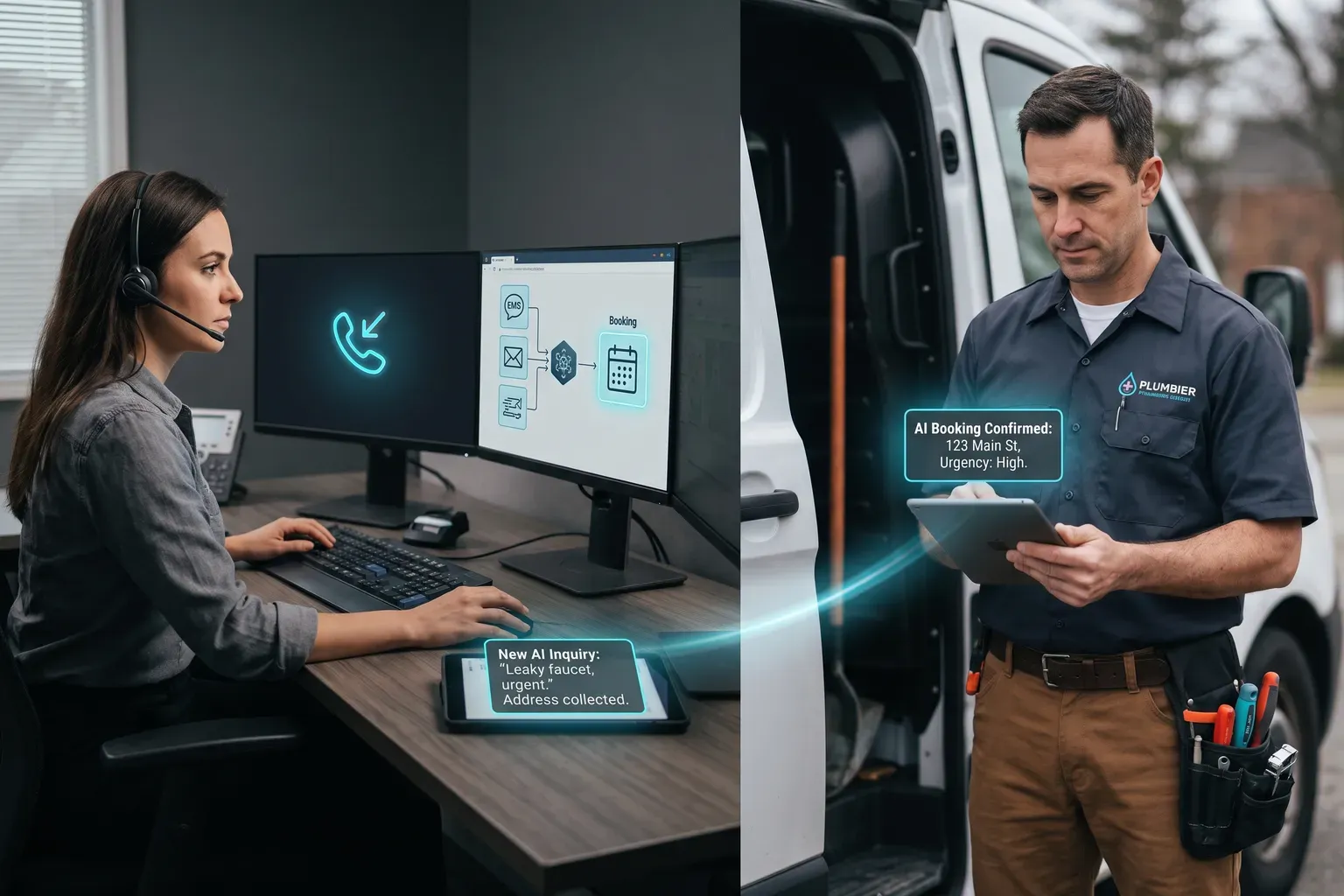
AI missed-call response for plumbing companies captures revenue by answering an inquiry, asking about the issue, urgency, and service address, then booking or routing the request. Novacall AI responds to inbound leads in under 60 seconds and supports voice, SMS, email, and WhatsApp workflows, turning a missed call into an active follow-up path.
Key takeaways
- A missed plumbing call is an unfinished service request, not simply a phone problem.
- The recovery path should capture the issue, urgency, and service address, then book or route the request.
- Novacall AI responds to inbound leads in under 60 seconds and supports voice, SMS, email, and WhatsApp workflows.
- Plan selection starts with daily call volume. Check included allowances, overage rates, and the cost of human follow-up before you buy.
Why missed calls cost more than a voicemail
Plumbing revenue disappears at the handoff between a ring and a response. A company does not need a perfect sales pitch at that moment. It needs to keep the caller engaged long enough to understand the job and choose a next step.
A caller with a leak, clogged drain, failed water heater, or another service problem already has a reason to act. When nobody answers, the caller still needs help. A voicemail asks that person to repeat effort, wait for a callback, and trust that the business will return it. That is a weak recovery path for urgent work.
According to Beginbound.com Missed Call Statistics AI (missed-call research), callers who reach voicemail are described as moving on to the next business rather than calling back.
A missed call also creates an operations problem. The office must identify which caller needs attention, collect the address, find a slot, and remember who needs a callback. Incomplete notes force the dispatcher to start over. An out-of-date calendar creates friction even after a callback succeeds.
Data from Calljolt.com Plumbing Industry Call Answering (plumbing industry data) reports a plumbing call miss rate and identifies emergency plumbing calls as unable to wait for a callback.
That is the business case for a recovery workflow. The goal is not to make the conversation sound clever. The goal is to turn a phone attempt into a usable service request that a person can act on.
In practice, the message after a missed call should not be a generic We missed you. It should move the caller toward a usable service request: what happened, how urgent it is, where the work is, and what time window fits.
Finding: Missed-call recovery creates value when it captures dispatch details and a next action, not when it merely acknowledges that a call was missed.
A plumbing company should also separate emergency handling from routine scheduling. A backed-up sink, a suspected burst pipe, and a question about maintenance need different routing. The workflow should collect enough context to make that distinction without pretending to diagnose the problem.
What does AI missed-call response for plumbing companies actually do?
At its core, this approach combines quick response, qualification, calendar booking, CRM handoff, and follow-up. It does not ask the office to choose between a phone system and a lead-management system. It creates a path between them.
Answer the inquiry
Novacall AI responds to inbound leads in under 60 seconds. It runs around the clock and supports voice, SMS, email, and WhatsApp workflows. Every plan includes multi-channel follow-up, CRM integration, and calendar booking.
The workflow keeps working when the office is busy, closed, or handling another dispatch request. Novacall AI lists unlimited inbound calls, while plan concurrency controls still determine how many calls the system handles at the same time. Treat unlimited inbound access as protection from a hard inbound call cap, not as a promise that every caller receives personal attention from a human.
Novacall AI also lists identical call quality on every call. That consistency matters when a team wants the same greeting, qualification rules, and booking process across the service area.
According to Vantaweb.io AI Receptionist Statistics Missed (AI receptionist statistics), the cited lead-response research found that companies contacting leads within five minutes of an initial inquiry were 21 times more likely to qualify the lead than companies that waited 30 minutes.
Qualify the request
AI qualification on the call covers budget, timeline, property or job type, and pre-approval status. For a plumbing workflow, make the practical details prominent: the issue, urgency, service address, and requested service.
The goal is not to conduct a long interview. The goal is to collect enough information for the next person or system to act. A dispatcher needs a clear description of the problem. A technician needs the service address and job type. The office needs a useful urgency signal before it offers a calendar slot.
AI missed-call response for plumbing companies is strongest when the qualification fields mirror dispatch needs. A long list of sales questions creates friction. A focused request summary creates momentum.
Book or route the request
Automatic appointment booking on the connected calendar gives the caller a concrete next step. The workflow should offer available service windows that match the rules in the calendar, then pass the request into the connected CRM.
If the request does not fit a normal appointment, route it according to the company workflow. That route can flag a request for review, send it to the right team queue, or preserve the details for a human callback. The important point is that the caller does not disappear after the missed call.
Finding: A useful automated receptionist does not stop at answering; it collects the facts that make booking or routing possible.
What should happen after a missed plumbing call?
Treat the missed call as a workflow event. The response should feel like a continuation of the caller's attempt to reach the business, not a disconnected marketing message.
Start with a clear identity
The response should identify the plumbing company and explain why the caller is hearing from it. A short, direct introduction builds context before the system asks for information. The language should work in voice, SMS, email, and WhatsApp rather than forcing the caller into a channel they did not choose.
Ask for dispatch facts
On a typical call, the caller describes the problem before they give an address. Let the caller explain the issue in plain language, then confirm the details that affect routing.
- What is happening at the property?
- How urgent is the problem?
- What service address should the team use?
- What type of plumbing work does the caller need?
- What appointment window fits the caller's schedule?
These prompts are useful because they follow the caller's natural order. The workflow earns the right to ask for the address by showing that it understands the problem. It also gives the dispatcher a summary that is easier to scan than a raw voicemail.
Offer a real next step
Once the request is clear, the system should offer calendar booking or route the request for review. Avoid a vague promise that someone will call later when the connected calendar already has a usable option.
A booked appointment is not the only acceptable outcome. Some jobs need review, some requests fall outside the service rules, and some callers want a person. The workflow should preserve the details and send the request to the correct path instead of forcing every caller into a generic booking flow.
Keep follow-up useful
Multi-channel follow-up gives the business more than a voicemail. Voice can carry a natural conversation. SMS can confirm the request. Email can provide a written summary. WhatsApp can support the workflow where the business uses it.
Follow-up still needs restraint. Repeating the same message without adding context makes the business feel automated in the wrong way. Use the issue, urgency, address, and booking status to make each message useful. Stop the recovery path when the caller books, declines help, asks for a human, or receives the route the business has defined.
A useful AI missed-call response for plumbing companies turns the missed call into a clear service request with a visible status. That status helps the office decide what to do next without asking the caller to start over.
Finding: The best post-call message reduces caller effort and dispatcher effort at the same time.
How should a plumbing company choose a plan?
Use daily call volume as the sizing basis. It is the only published sizing basis in the pricing evidence. Do not use headcount, revenue, or a guessed monthly lead boundary as a plan rule. The published material does not set a monthly lead-count boundary, a monthly call-count boundary, a headcount boundary, or a revenue boundary.
Published plan fit
The table below shows the published daily call fit and the included voice and messaging allowances. The allowances help you compare routine usage with expected follow-up activity.
Novacall AI pricing is by custom quote. Scope depends on lead and call volume, channels, integrations, and workflow. Book for a quote; current commercial terms are confirmed in a written proposal.
Every plan includes multi-channel follow-up, CRM integration, and calendar booking. Support also comes with every plan, with the published support level changing by tier.
Novacall AI capacity, included usage, and implementation scope are confirmed in your proposal. Book for a quote.
The right AI missed-call response for plumbing companies starts with the calls you receive each day, not a guessed headcount. If the business has seasonal swings, review the high-volume operating period rather than choosing a tier from a quiet week.
Is AI missed-call response for plumbing companies worth the cost?
The cost question is simple: does the recovery workflow deserve a place in the revenue process? Answer it with your missed-call records, booked jobs, collected revenue, and gross margin. Do not judge the purchase from the monthly subscription alone.
Published all-in view
The following figures show typical costs at the daily call volumes listed above. They include typical monthly overage and the setup fee in the initial billing year.
These are typical figures at the published daily call volumes, not a promise that every month's bill will match the table. Actual overage depends on voice minutes, SMS, and email use. Setup is not repeated in later billing years.
Compare with human coverage
The pricing evidence gives a fully loaded human inside sales agent a cost of $50,000 to $80,000 per year. It describes that role as working 8 hours a day and 5 days a week. That comparison helps frame coverage cost, but it is not a promise about the exact cost or output of a specific hire.
A human still owns judgment, empathy, technical understanding, and exception handling. Automation handles repeatable response and qualification work without a ramp period. Compare the two options using your own job value, gross margin, staffing plan, and missed-call records.
The useful buying question is not whether automation sounds impressive. It is whether the workflow reliably moves enough missed inquiries into qualified, booked, or correctly routed requests to justify the plan.
Finding: Subscription cost is only half of the decision; the other half is whether the business has a clear process for acting on the requests the system recovers.
How do you implement AI missed-call response for plumbing companies?
Start with the service rules, not the script. A polished greeting cannot repair a vague dispatch process. The system needs clear instructions about which requests the business accepts, which details it needs, and where each request belongs.
Define service rules
Write down the job types the company handles, the service area, the urgency language, the appointment windows, and the situations that require human review. Include routine work and emergency inquiries in the same planning session so the workflow does not treat every caller alike.
Keep the rules operational. State what the system should ask, what it should confirm, and what it should do with the answer. Avoid instructions that depend on a technician making a physical judgment through a phone conversation.
Connect the systems
Connect the CRM and calendar before inviting live callers into the workflow. Confirm that the calendar reflects real availability and that the CRM gives the team a visible place to review the request.
Every plan includes CRM integration and calendar booking. Use those connections to reduce duplicate entry. The request should carry the issue, urgency, service address, contact details, and booking or routing status into the system the office already uses.
Write for stressed callers
People calling about plumbing problems often speak quickly, use informal descriptions, or change details as they explain the issue. Use short prompts. Repeat important information for confirmation. Give callers a clear chance to correct the address or explain that the situation is more urgent than it first sounded.
Do not force the caller to understand plumbing terminology. Ask what they see, hear, or need fixed. Let the dispatcher or technician apply professional terminology later.
Build the follow-up path
Decide how voice, SMS, email, and WhatsApp work together. A caller who does not complete the voice interaction should receive a useful follow-up. A caller who books should receive confirmation through the channel the workflow supports. A caller who asks for a human should enter the review path rather than continue through an unrelated script.
Make consent and opt-out handling part of the process. Keep the content consistent with the business identity and the purpose of the call. Novacall AI lists GDPR compliance, but the plumbing company still needs clear internal rules for customer communication and data handling.
Review exceptions before launch
Test out-of-area requests, incomplete addresses, unavailable calendar windows, unclear job descriptions, requests for a person, and urgent safety concerns. Review the result with the dispatcher who handles real calls. That person will notice gaps that are easy to miss in a marketing review.
In our experience, the best launch brief is a short operating document that the office can understand and update. It names the accepted work, the questions that matter, the booking rules, and the escalation path.
Novacall AI lists same-day setup with no ramp period. That removes a long onboarding delay, but the team still needs to approve the service rules, calendar, and escalation path before sending live callers into the workflow.
What should you measure after launch?
Do not judge the system only by whether it answered. Measure the full path from missed call to business action. A response that produces no usable details is not the same as a qualified request. A booked appointment is not the same as collected revenue.
Track the following signals in the CRM and call records:
- Response: whether the inbound lead received a response under 60 seconds.
- Qualification: whether the issue, urgency, and service address are complete.
- Booking: whether the caller received a real calendar option.
- Routing: whether requests outside normal booking rules reached the right queue.
- Review: whether a dispatcher can understand the request without replaying the entire interaction.
- Revenue: whether recovered requests become jobs, completed work, and collected revenue.
| Signal | What to inspect | Management use |
|---|---|---|
| Response | Speed and completion of the missed-call reply | Confirm that the workflow is active when the office is busy |
| Request quality | Issue, urgency, address, and job type | Improve questions that create incomplete records |
| Calendar outcome | Booking or clear route for review | Find friction in scheduling rules |
| Follow-up outcome | Caller response, opt-out, or handoff | Remove messages that add noise |
| Business outcome | Job status, completed work, and collected revenue | Connect automation to the actual revenue process |
Finding: A booked appointment is an operational result, not proof of collected revenue. Keep measuring through job completion and payment.
Use the plan's included allowances and overage rates as cost inputs. Use your own CRM and accounting records as outcome inputs. Avoid an unsupported ROI multiple or a broad success claim when the business has not defined the job value and margin it is trying to recover.
Where does AI missed-call response for plumbing companies stop?
An AI voice workflow handles conversation and follow-up. It does not inspect a leak, assess a physical hazard, shut off water, or make a final repair judgment. Those tasks belong to trained humans and the company's safety process.
Even identical call quality on every call does not create identical judgment. A caller can provide incomplete information. A calendar can contain a bad rule. A service request can fall outside the company's normal work. The workflow needs a clear route for those exceptions.
Keep boundaries explicit. Do not let the system diagnose a dangerous condition, promise an unsupported price, or make a repair guarantee. Ask for the details needed to route the request, then move technical judgment to the qualified person responsible for the work.
The business also owns the quality of its service rules. If hours, service areas, booking windows, or escalation instructions are wrong, automation follows the wrong process consistently. Review those rules when the business changes its coverage or dispatch model.
Finding: Automation is strongest at response, qualification, booking, and routing; it is not a substitute for physical inspection or professional plumbing judgment.
Turn the missed call into a service request
A plumbing company does not need to rebuild its entire operation to improve missed-call recovery. Start with the calls the office misses, define the information dispatch needs, connect the CRM and calendar, and set clear boundaries for emergency and human review.
Then compare the plan cost with the requests the workflow recovers. Use daily call volume to choose the tier, included allowances to understand normal use, and overage rates to plan for heavier follow-up.
If unanswered plumbing calls are part of your revenue gap, Book a call to map the issue, urgency, service address, booking rules, CRM, and calendar workflow.