Best Phone System for Electricians: 6 Features That Pay for Themselves in 2026
 by Parvez Zoha
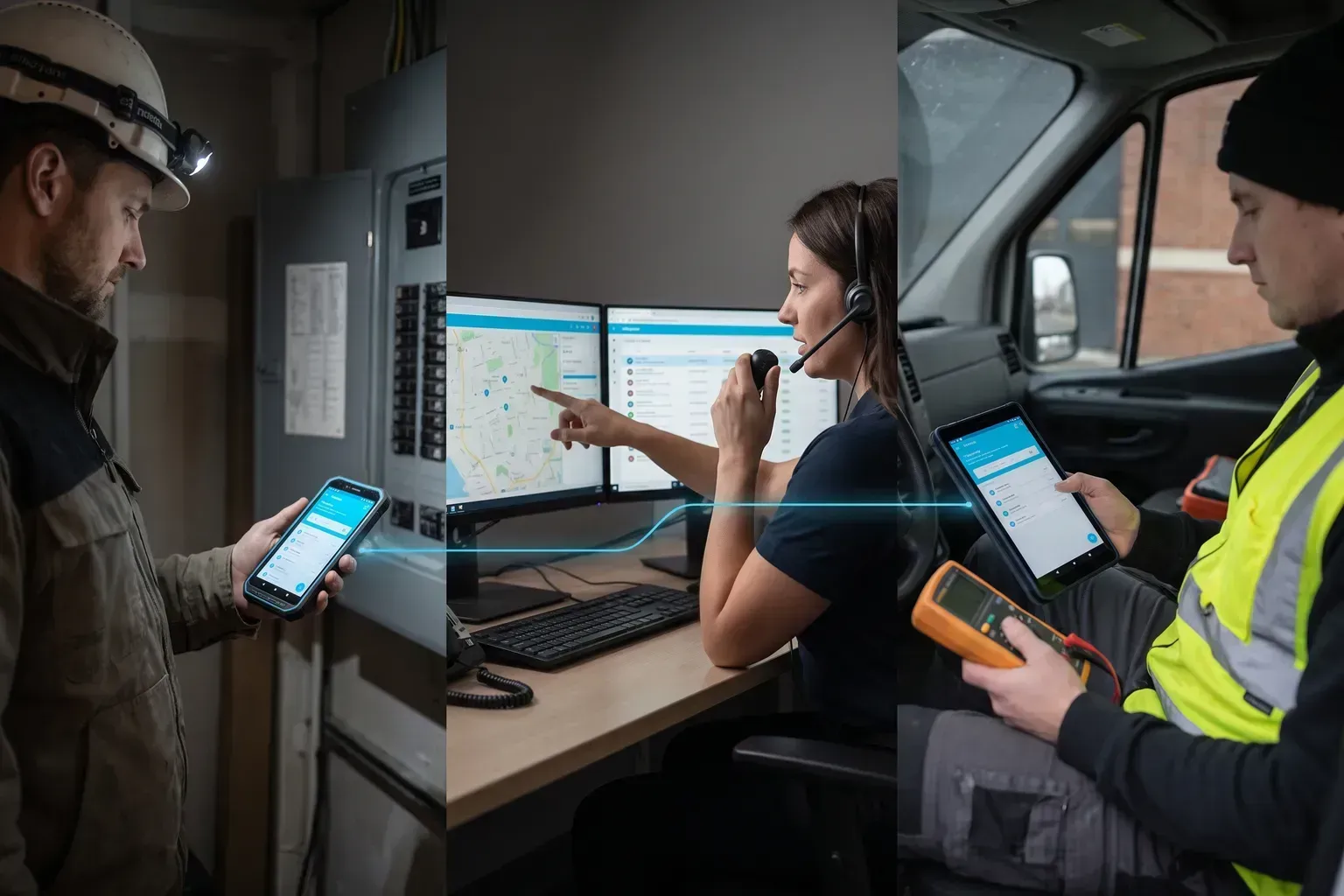
A phone system for electricians has to fit the work, not just the office. A service request may arrive while the owner is driving, a dispatcher is reading a panel label, or a technician is working in a noisy room. The useful question is not which product has the longest feature list. It is whether the system turns a caller's first sentence into a safe, owned, reviewable next step without asking the field team to become full-time call-center operators.
The phrase “pay for themselves” should be treated as a test to run, not as a promise made in a headline. A system earns consideration when the team can connect a call to a real operating improvement, identify who owns that improvement, and review the evidence without guessing. This guide uses six features as a field checklist for residential service, commercial work, maintenance, installations, and emergency triage.
Key Takeaways
- Start with the electrician workflow: service type, location, urgency, access notes, assigned owner, and the next customer commitment.
- According to the U.S. Bureau of Labor Statistics, electricians install, maintain, and repair electrical power, communications, lighting, and control systems (occupational outlook).
- The six buying tests are trade-aware intake, dispatch routing, mobile handoff, a shared record, controlled automation, and change review. A vendor that cannot show the path from caller to owner has not shown payback.
What should the best phone system for electricians handle?
Electricians do more than install wire. They maintain equipment, troubleshoot problems, read technical diagrams, work across homes and businesses, coordinate with other specialists, and sometimes direct helpers or apprentices. A phone system should preserve context while a request moves between a caller, an office, a crew lead, and a person at the worksite. It should not force every caller into the same generic menu.
Before comparing screens, map the work in plain language. Write down how a new service request arrives, what information the office needs, which situations require a human immediately, how a technician receives an assignment, and where the final disposition is recorded. Then ask each candidate to demonstrate that exact path. A good demonstration starts with a believable electrician call rather than a polished tour of settings.
The best phone system for electricians also makes uncertainty visible. If a caller cannot describe the equipment, the record should say that the information is unknown instead of quietly inventing a diagnosis. If a request sounds urgent, the system can follow the company's approved escalation rule, but it should not pretend to assess electrical danger. Life-safety decisions belong to trained people and local emergency guidance.
Feature one: trade-aware intake
A useful intake flow captures what the office needs to decide the next step. The fields will differ by contractor, but a practical starting set includes caller name, callback number, service address, property type, request category, preferred access window, and a short description in the caller's own words. Add fields for an existing customer reference, equipment or system context when the caller knows it, and whether another person at the property needs to be contacted.
Which caller details should the system collect?
Ask for the smallest set that helps a person route the request. A homeowner reporting a tripped breaker may need a different path from a facilities manager requesting scheduled maintenance. A builder asking about a new installation may need a project contact and site details rather than a residential service script. The system should allow the caller to say “I do not know” and should preserve that response.
Test the intake with calls that contain incomplete, noisy, or contradictory information. Include a caller who is not the property owner, a commercial request with several rooms, and a maintenance request that references a previous visit. The record should flag missing information for follow-up. It should never turn a guess into a work order fact.
Feature two: dispatch-aware routing
Routing is where a phone system becomes part of field operations. A shared line can be useful, but a shared line without ownership can leave everyone assuming someone else responded. Ask how the system represents the office queue, the on-call person, a crew lead, a sales or estimating owner, and a technician who is already assigned to the site.
Which calls should be routed first?
Define priority in terms the company can defend. A request may be time-sensitive because the customer has a scheduled site visit, because a commercial facility has a maintenance window, or because the office has an approved emergency protocol. Do not make the phone system decide that an electrical condition is safe or unsafe. Instead, let the caller hear the company's guidance and let a qualified person take ownership when the situation needs judgment.
Routing should preserve the reason for the transfer. When a call moves from an answering flow to dispatch, the receiving person should see the caller's stated issue, location, access details, and any unanswered question. When the office sends a call to a field worker, the worker should know whether the expected action is a callback, a status update, or a request for an approved site process.
Look for controls that make fallback explicit. What happens if the selected person does not answer? Does the call return to a queue, create a task for a named owner, or stop with a clear message? How is a change to the on-call path approved? A reliable phone system for electricians treats routing as a maintained operating rule, not as a one-time menu configuration.
Feature three: a field-ready handoff
A technician may be wearing gloves, carrying tools, or moving between locations. The handoff must be usable in that context. A useful notification is short, identifies the customer and site, states the requested action, and links to the approved record. It does not bury the important detail inside a long transcript or send sensitive information to an unapproved personal channel.
What should a field handoff contain?
Use a compact handoff packet:
- Caller and callback number, subject to the contractor's access policy.
- Service address and any access instruction the caller intentionally supplied.
- Caller-described request, kept separate from a technician's diagnosis.
- Owner, requested response, and the next review point.
- Links or identifiers for the related customer and job records.
- A place for the technician or dispatcher to record the disposition.
Feature four: a shared record that survives the call
A phone system for electricians should leave a useful record after a conversation ends. The record is valuable when someone can answer: who called, what did they ask for, who owns the next action, what was communicated, and what remains unknown? A recording by itself does not answer those questions.
Design the record around the work rather than around a vendor's default fields. Use a stable customer identifier when one exists, but do not merge two households or businesses merely because their names sound alike. Keep the original caller description available when an employee later adds a normalized category. Retain the details needed for the contractor's own review policy, and define who may view transcripts or recordings.
| Feature | Electrician scenario | Evidence to test | Owner or stop condition |
|---|---|---|---|
| Trade-aware intake | A caller wants help with a residential electrical issue but cannot name the equipment | The record keeps the caller's words and marks unknown fields | Dispatcher owns clarification; no diagnosis is created automatically |
| Dispatch routing | A commercial maintenance request arrives while the office is handling another call | The queue shows the assigned person and fallback path | Operations owner approves the route and reviews exceptions |
| Field handoff | A technician needs the site context before returning a call | Notification contains location, request, owner, and next action | Field lead confirms receipt; office remains responsible for open work |
| Shared record | A customer calls back after a prior visit | Another employee can reconstruct the conversation and pending action | Records owner resolves duplicates and access issues |
| Controlled automation | A system asks routine intake questions | Approved script, escalation option, and correction path are visible | Compliance or operations owner approves changes |
| Change review | A routing rule or prompt is edited | Version, editor, reason, and test result are recorded | Release owner can pause or roll back the change |
Feature five: controlled automation
Automation can ask a repeatable intake question, collect a callback preference, identify a department, or present an approved after-hours message. It should not be sold as a substitute for a qualified electrician, a dispatcher with local context, or an emergency service. The useful design is bounded: state what the system can do, what it cannot do, and when a person takes over.
According to Google Cloud, a playbook is the basic building block of generative agents (playbook documentation). For an electrician workflow, that idea is most useful when a playbook has a narrow task, clear instructions, allowed fields, and a defined handoff. A routine intake playbook can ask for a service address. A different, human-owned flow can handle a request that requires judgment. Do not combine every possible question into a single opaque assistant.
According to Twilio, Twilio Studio is a visual tool for building communications applications with little or no code (Studio documentation). That description is a reminder to evaluate the workflow a team can inspect and maintain, not a promise that a visual builder will fit every contractor. Ask to see how a prompt is changed, how a branch is tested, and how an incomplete response is handed to a person.
Automation should match the language of the trade. “Tell us what changed” invites an observation. “Which component failed?” may invite a guess. Make the script match the information a caller can reasonably provide. If the caller reports smoke, sparks, an injury, or another potential hazard, use the company's approved emergency direction and human escalation process; do not ask the assistant to diagnose the condition.
Feature six: reviewable routing and change control
Phone systems often fail quietly after a small change. A new greeting can remove a handoff option. A holiday schedule can send calls to an empty queue. A changed field label can make a report difficult to interpret. The buying decision should include controls for noticing and correcting those changes.
According to AWS, a flow defines the customer experience with your contact center from start to finish (flow documentation). Use that workflow concept as a review question: can the contractor trace the customer's path from greeting to queue, transfer, callback, and disposition? The answer should be visible in a diagram, a revision record, or a test log—not just in an administrator's memory.
Create a release checklist for every material change. Name the changed route or prompt. State the intended caller experience. Test a normal service request, a request with missing information, an after-hours request, a transfer to a person, and a failed or unanswered route. Record the result and the person who accepted the change. If any test creates an unsafe promise or loses ownership, pause the release.
A reviewable system makes reporting modest. Count only events that the record defines consistently: calls entering a route, calls transferred, callbacks requested, records completed, and exceptions needing review. A count is not an outcome. To decide whether the system is paying for itself, compare the same definitions over an agreed review period and pair them with a human assessment of rework, customer communication, and dispatcher workload.
How to compare phone systems without inventing payback
Ask every candidate to walk through the same electrician scenarios. Start with a new residential service request, continue with a commercial maintenance call, then test an after-hours message and a return call from a technician. Include a caller who does not know the equipment name and a caller who changes the access detail. The point is to observe whether the workflow preserves ownership and correction.
Use a scorecard that separates required behavior from optional polish:
- Intake: can the team capture the caller's own description and mark unknowns?
- Routing: can a named owner and fallback path be seen?
- Handoff: can a field worker receive useful context without a long replay?
- Records: can another employee continue the interaction?
- Automation: can each automated task be constrained and escalated?
- Review: can a change be tested, attributed, and reversed?
- Terms: can the contractor understand what is included, what requires configuration, and what data handling applies?
Do not accept a payback story built from assumed call volume or an invented improvement percentage. Build the baseline from the contractor's own records. Choose observable events, define how a human will verify them, and decide in advance what evidence would justify keeping, changing, or ending the trial. If the vendor cannot explain how the proposed result would be measured, the promise is not yet a business case.
What does “pay for themselves” mean for an electrician?
For this article, payback means the operating value is clear enough for the owner to compare against the full cost and effort of the phone system. That value might be fewer handoff questions, cleaner dispatch records, less repeated customer explanation, or a more consistent after-hours process. Those are hypotheses until the contractor documents them. They are not guaranteed results of any product.
Separate four kinds of evidence. First is caller evidence: what the person asked for and whether the request was understood. Second is workflow evidence: where the request went and who owned it. Third is field evidence: whether the technician received a usable handoff. Fourth is management evidence: whether the owner can review exceptions and changes. A candidate that offers a persuasive dashboard but cannot connect the dashboard to these records has not demonstrated value.
In our experience, the clearest phone-system decision comes from a short, honest scenario log: the original request, the route taken, the handoff received, the correction made, and the final owner. That log is more useful than a generic promise because the electrician can inspect the actual work and decide what should change.
A practical review sequence
Begin by interviewing the people who answer calls and the people who receive field handoffs. Ask where context is currently lost. Write the current path before discussing automation. Then choose electrician scenarios that expose the important decisions: a routine service request, a maintenance request, an uncertain description, and an after-hours call.
Configure a candidate with the contractor's words and approved ownership rules. Keep the first version narrow enough that a person can inspect every branch. Test the caller experience from a clean number, test the office view, and test the field notification. Have a person deliberately provide incomplete information so the team can see whether the record marks uncertainty.
After the test, review the call record, route, message, edit history, and exception with the owner and dispatcher. Ask whether the result can be explained to a new employee. If not, simplify the workflow before adding more automation. The decision should be based on evidence the contractor can reproduce, not on a demo that only works when the presenter controls every input.
How do field-service teams test coverage?
Use a call map that mirrors the contractor's day. Mark where a customer first reaches the company, where the request becomes an owned record, where a dispatcher can correct it, and where the field worker receives the next action. Test the map with a residential service request, a commercial maintenance request, and an installation inquiry, while keeping the examples privacy-safe. Ask a person who did not configure the flow to explain the result from the record alone. If that person cannot tell which facts came from the caller and which were added later, the handoff needs clearer labels. If a route ends without an owner, treat the route as incomplete. This review makes the six features practical: intake supplies context, routing assigns responsibility, handoff carries it, records preserve it, automation stays bounded, and change control keeps the path understandable.
How should an electrician compare real operating scenarios?
A residential service call tests clarity. The caller may know the symptom but not the equipment name, and the office may need the address, access detail, and a callback owner. A useful system preserves the caller's description, asks only approved follow-up questions, and makes the human handoff visible. It should not turn a symptom into a diagnosis or present an automated estimate as a fact.
A commercial maintenance call tests coordination. The caller may represent a facility with a preferred contact, access requirement, or maintenance window. The record should separate the facility's request from internal notes and show which office person is responsible for confirming the next step. A field worker should receive context that helps with the call without receiving a confusing dump of every available field.
An installation inquiry tests a different path. It may belong with estimating or a project coordinator rather than emergency service dispatch. Ask whether the caller's project description, contact role, site, and requested follow-up can be handed to the right person without losing the original wording. The route should remain understandable when the first recipient is unavailable.
An after-hours call tests boundaries. The message should communicate the contractor's approved direction, offer the permitted way to request a human response, and record the choice made by the caller. The phone system should not imply that every after-hours request receives the same response or that a recorded message is a substitute for local emergency services.
What should the owner see after each scenario?
The owner should see a small, legible chain: the incoming request, the information collected, the rule that selected the route, the person who owns the next action, and the disposition. Show exceptions beside successful paths. A system that hides exceptions behind a summary score makes it harder to improve the workflow.
Which operating controls matter during a trial?
Ask who can edit prompts, routing rules, business hours, caller fields, recordings, and access permissions. The answer should be a named role, not a shared password or an informal assumption. Ask how an edit is reviewed, how its reason is recorded, and how the team returns to the previous approved version if the change creates confusion.
Separate configuration from judgment. An office administrator may maintain a greeting, while an operations owner approves the escalation path. A field lead may define the information needed for a handoff, while the records owner defines retention and access. A phone system should let those responsibilities be reflected in its workflow or in the contractor's operating log.
Review the evidence with the people who use it. Dispatchers can identify missing context. Technicians can identify messages that are too long or unclear. Owners can decide whether a process is worth maintaining. Do not ask a dashboard to answer a question that only a human review can answer, such as whether a customer received a safe and understandable next step.
What should be documented before choosing a system?
Write down the contractor's approved call categories and the boundary between information collection and electrical judgment. List the records that must be available to the office and the records that should be restricted. Describe the human handoff for incomplete, ambiguous, or potentially hazardous requests. Note the conditions under which a person must intervene.
Then write the acceptance test in the same language. A candidate passes intake when the record preserves caller words and unknowns. It passes routing when a person can identify the owner and fallback. It passes handoff when a field worker can act on the next step without replaying the call. It passes review when an owner can see what changed and why. This document becomes the comparison baseline and prevents a polished demonstration from changing the buying criteria.
FAQ: phone systems for electricians
Is a phone system with AI automatically the best choice?
No. AI may be useful for a bounded intake task, but the best phone system for electricians is the one that preserves ownership, handles uncertainty honestly, and provides a human path for judgment. Ask what the system does when the caller's request is outside the approved task.
Should a phone system replace the electrician or dispatcher?
No. A phone workflow can collect information and organize a handoff. It should not diagnose an electrical condition, authorize work, promise a result, or replace the licensed and operational judgment required by the contractor's process.
What is the first test for a phone system?
Use a real but privacy-safe scenario from the contractor's work. Give the system a normal service request, incomplete equipment information, and a transfer requirement. Confirm that the office can see the request, a named owner receives it, and the record can be corrected.
How can an owner verify payback?
Define the baseline events, the review owner, and the evidence required before the trial begins. Compare the same definitions after the trial and include human observations about rework, handoff clarity, and customer communication. Do not treat an assumed outcome as proof.
What should a contractor ask about recordings and records?
Ask where records are stored, who can access them, how corrections are tracked, how long the contractor can retain them, and what local rules apply to recording or messaging. Get legal or compliance advice for the contractor's specific jurisdictions and use case.
Can Novacall AI fit an electrician workflow?
Evaluate it with the same scorecard used for any candidate: trade-aware intake, dispatch ownership, field handoff, shared records, controlled automation, and change review. Keep the decision grounded in the contractor's own scenarios and evidence.
Plan a reviewable electrician call workflow with Novacall AI.