Missed Calls: AI Response for Wellness Businesses in 2026
 by Parvez Zoha
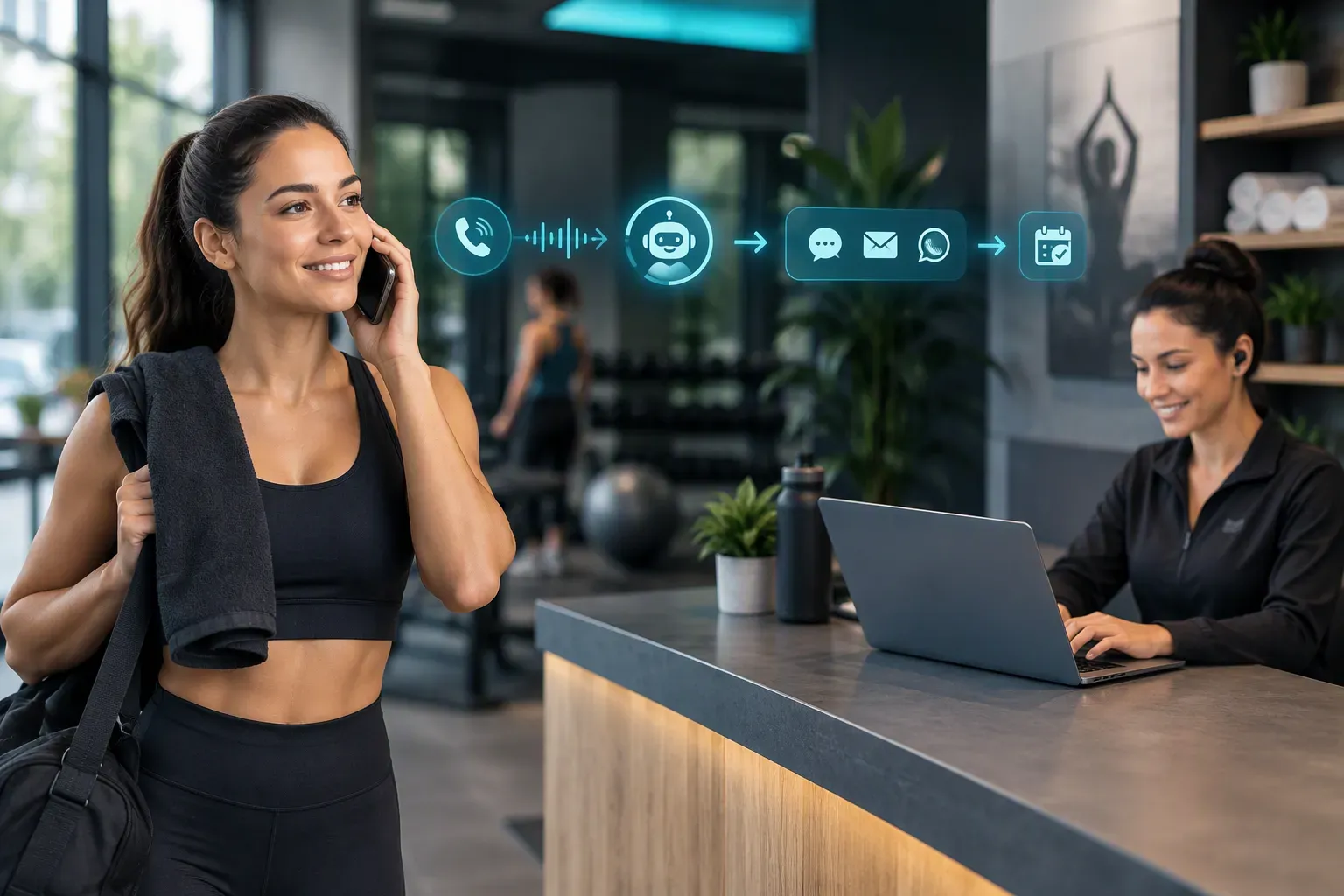
AI missed-call response for wellness, fitness, and personal-care businesses turns an unanswered inquiry into a structured follow-up. Novacall AI responds in under 60 seconds, qualifies the caller’s goal and service interest, and can book a consultation, trial, or callback. It also follows up by SMS, email, or WhatsApp when a live answer is not possible.
Key takeaways
- A missed call is a buying signal that needs a clear recovery path, not a generic voicemail message.
- The best workflow captures the caller’s goal, service interest, availability, and contact details before offering the right next step.
- Voice, SMS, email, and WhatsApp follow-up keep the conversation moving when staff are teaching, treating clients, or helping someone in person.
- Calendar booking and CRM integration turn a phone conversation into an owned appointment and a usable record.
Why missed calls create a revenue leak
Wellness, fitness, and personal-care businesses often receive calls at the exact time staff are busy serving someone else. A trainer is leading a class. A massage therapist is with a client. A studio owner is handling a membership question at the front desk. A salon team is moving between appointments. The phone rings, and the next potential member or client hears voicemail.
That missed call is not just a phone problem. It is an unfinished buying conversation. The caller already chose to reach out, but the business has not learned the goal, service interest, preferred timing, or contact details. Without that information, staff cannot prioritize the inquiry or offer a useful next step.
In practice, callers often explain the outcome they want before they share their contact details. A fitness prospect talks about building strength, returning after an injury, or finding a welcoming class. A personal-care prospect asks about a service, availability, or preparation. A wellness prospect wants to know whether a consultation fits their needs. The recovery workflow should preserve that context.
According to Beginbound.com (Beginbound.com Missed Call Statistics AI), weekend call volume runs 60–80% of weekday volume, while fewer businesses staff phones, so weekend missed-call rates frequently exceed 40%.
According to Pitchit.ai (Pitchit.ai Gym Phone Call Statistics), ringing phones left unanswered during peak rush hours represent one of the largest revenue leaks in the fitness industry.
Those findings do not predict the result for a particular studio, clinic, gym, salon, or personal-care business. They do show why the operating schedule matters. A business that answers only when a staff member is free leaves its response process tied to the same busy periods that create the missed calls.
Map the missed-call problem by asking practical questions. When do calls arrive? Which questions repeat? Which callers need a person? Which requests belong on a calendar? Which details do staff need before they call back? The answers shape the workflow better than a generic promise to answer every call.
| Caller intent | Missed-call risk | Useful recovery |
|---|---|---|
| Membership inquiry | The prospect compares options without hearing from the team | Ask about goals, service interest, and availability, then offer a tour, trial, or consultation |
| Service inquiry | The caller does not know whether the business offers the requested service | Confirm the service interest and route unusual questions to staff |
| Consultation request | The caller has no appointment after reaching out | Offer available calendar times and confirm the booking |
| Callback request | The lead becomes difficult to prioritize later | Capture contact details and preserve the caller’s reason for calling |
Finding: A missed call becomes recoverable when the business captures intent and owns the next step.
What should happen after a missed enquiry?
The response should feel like a continuation of the caller’s request. Start by acknowledging the missed call. Then ask a focused question about the reason for reaching out. Capture the details that staff need. Offer a relevant appointment or callback. Finally, record the conversation in the CRM so the next person sees the same context.
Novacall AI provides inbound lead response in under 60 seconds. That response can use a voice workflow or continue through SMS, email, or WhatsApp. The channel matters less than the handoff: the caller should know what happens next and the business should retain the information needed to act.
Acknowledge the request
The first message should identify the business and explain that the team is following up. It should not pretend that a human answered the original call. Clear language builds trust and gives the caller a reason to continue.
For example, a response for a fitness studio can say that the studio received the call and asks whether the caller wants information about membership, classes, or a trial. A response for a personal-care business can ask which service the caller is interested in and whether they want to find an appointment.
Ask for the useful detail
Do not begin with a long intake form. Ask the question that changes the route. A membership caller needs a goal and service interest. A consultation caller needs availability. A callback request needs contact details and a short description of the question.
On a typical call, the caller gives enough context to choose the next question if the system listens for intent instead of forcing a rigid menu. That makes the interaction feel more like a helpful front desk conversation and less like a form disguised as a phone call.
Offer a clear next step
A useful next step is specific to the request. It can be a consultation, trial, callback, or appointment for the requested service. Novacall AI books appointments on the connected calendar, so the conversation can move from interest to a scheduled action without waiting for a staff member to open the calendar later.
If the request falls outside the defined workflow, route it to a person. Automation should reduce the work around routine inquiries, not hide a question that needs judgment.
Finding: The strongest missed-call recovery path connects intent, contact details, and calendar action in one continuous workflow.
How AI missed-call response for wellness, fitness, and personal-care businesses fits the workflow
The system works best when it sits between the incoming call and the business process that follows. That is where AI missed-call response for wellness, fitness, and personal-care businesses turns a phone event into a structured lead record.
Novacall AI uses voice workflows to respond to inbound callers and qualify the conversation. It supports follow-up through SMS, email, and WhatsApp, which gives the business a way to continue the conversation after the initial call. The workflow also connects with the CRM and the business calendar.
For a fitness business, the system can guide a membership inquiry toward a trial or consultation. For a wellness business, it can collect the service interest and availability before offering a booking. For a personal-care business, it can handle routine service questions while routing sensitive or unusual requests to staff.
The system operates around the clock and supports conversations in multiple languages. It also provides consistent call quality on every call. Those capabilities matter because the recovery process should not depend on whether the owner is at the desk, whether a trainer is between sessions, or whether the front desk is handling a rush.
| Workflow layer | What it does | Business record |
|---|---|---|
| Voice response | Handles the conversation and identifies the caller’s reason for reaching out | Call context and qualification details |
| Multichannel follow-up | Continues the conversation through SMS, email, or WhatsApp | Written confirmation and next-step reminders |
| Calendar booking | Offers available appointment times on the connected calendar | Consultation, trial, service appointment, or callback |
| CRM integration | Stores the inquiry and its context for staff | Contact record and follow-up status |
| Human handoff | Routes sensitive or unusual requests to the team | Clear ownership and staff action |
Finding: Automation earns its place when it connects communication, qualification, booking, and recordkeeping rather than handling only the phone greeting.
A practical qualification flow for memberships, services, and consultations
Qualification should help the business decide what to do next. It should not make the caller complete an interview before receiving help. Keep the questions tied to the service and the appointment path.
For a membership inquiry, start with the caller’s goal. Ask whether they want personal training, group classes, open gym access, recovery support, or another service the business offers. Then ask about availability and capture contact details. The final question should point toward a tour, trial, consultation, or callback.
For a service inquiry, confirm the requested service and the caller’s preferred timing. A personal-care business can use this step to separate a routine booking from a request that needs staff review. The system should not answer beyond the approved service information or make promises the team has not authorized.
For a consultation inquiry, collect the reason for the consultation, the caller’s availability, and the best contact details. Calendar booking should show only the appointment options the business has connected. CRM integration should preserve the reason for the inquiry so staff do not begin the conversation from scratch.
A strong qualification script uses plain language. Replace internal labels with questions a caller would understand. Ask what they want help with, which service interests them, when they are available, and how the team should contact them. If the business needs additional information, add it only when that information changes the next step.
| Business type | Qualification focus | Appropriate next step |
|---|---|---|
| Gym or fitness studio | Fitness goal, service interest, availability, and contact details | Trial, tour, membership consultation, or callback |
| Wellness practice | Desired support, service interest, timing, and contact details | Consultation or staff handoff |
| Spa or salon | Requested service, preferred availability, and contact details | Service appointment or callback |
| Personal-care provider | Routine service question versus sensitive or unusual request | Booking for routine needs or human review |
Privacy also belongs in the design. Collect only the information needed for the stated next step. Explain how the information will be used when the workflow requests contact details. Keep records in the connected CRM so staff can see ownership and follow-up status.
Finding: Qualification should reduce uncertainty for the business while keeping the caller’s path short and understandable.
What does the available evidence actually tell you?
External research can help a business frame the problem, but it cannot forecast the bookings or revenue of a particular location. The useful question is not whether a published figure guarantees an outcome. It is whether the evidence supports a better operating decision.
According to Kaicalls.com (Kaicalls.com Missed-Call Economics Costs Response), the report was updated August 25, 2026 and includes live KaiCalls network totals plus sourced benchmarks on missed calls, staffing costs, response speed, and AI receptionist economics.
Data from Vantaweb.io (Vantaweb.io AI Receptionist Statistics Missed) cites a general small-business figure, not a pet-specific figure, that 62% of calls go unanswered or to voicemail.
According to Magicline.ai (Magicline.ai AI Receptionist Statistics Missed), the page recommends multiplying average job value by missed calls each week, then comparing that result with the cost of around-the-clock AI coverage.
According to Stakdsystems.com (Stakdsystems.com AI Receptionist Statistics Missed), its summary says the pattern is that the phone still matters, unanswered callers mostly vanish, response speed compounds fast, demand runs around the clock, and businesses are adopting AI to close those gaps.
These sources use different descriptions and contexts. Treat them as prompts for measurement, not as a substitute for your own call review. A gym should inspect its membership inquiries. A salon should inspect service requests. A wellness business should inspect consultation calls. The relevant baseline is the business’s own call flow and follow-up record.
For AI missed-call response for wellness, fitness, and personal-care businesses, the practical measurement plan is simple. Track inbound call attempts, calls answered by a person, automated conversations, qualified inquiries, booked appointments, completed appointments, and staff handoffs. Review the reasons for missed calls and the points where callers stop responding.
Finding: External benchmarks explain why response deserves attention, while first-party call records show where the workflow needs work.
How to set up AI missed-call response for wellness, fitness, and personal-care businesses
Setup should begin with the business process, not the script. Write down what happens today when a call is missed. Identify who owns the callback, where the contact is recorded, how appointments are offered, and which questions require a person.
Map the call sources
List the phone numbers and entry points that generate inquiries. Include the main business line, service-specific lines, website calls, referral calls, and any number used in advertising. Separate new inquiries from existing-client support so the workflow does not treat every caller as a sales lead.
Define the routes
Create clear routes for membership inquiries, service inquiries, consultations, callbacks, and staff handoffs. Each route needs a short qualification path and an approved next step. Keep the rules readable enough for an owner or manager to review without technical help.
Connect the calendar and CRM
Connect the calendar that contains real appointment availability. Then connect the CRM where staff already manage contacts and follow-up. Test what happens when an appointment is booked, changed, or canceled. Confirm that the conversation context travels with the contact record.
Write the channel rules
Use voice when the caller needs a conversation. Use SMS when the caller needs a quick written confirmation. Use email for longer service details or appointment information. Use WhatsApp where the business already communicates with clients there. Keep each message tied to the same inquiry so the caller does not receive disconnected replies.
Novacall AI includes multi-channel follow-up, CRM integration, and calendar booking in every plan. Plans are tiered by daily call volume. Higher tiers include more voice minutes, more concurrent calls, and more AI agents. The right tier depends on the business workflow and the volume it needs to support, not on a generic industry label.
Test the handoff
Call the business with routine questions, unclear requests, scheduling changes, and requests that need a person. Check whether the system captures the caller’s goal, service interest, availability, and contact details. Check whether the calendar shows the correct availability. Check whether staff can see what the caller already said.
Novacall AI provides same-day setup with no ramp period. The business still needs to supply accurate service information, calendar rules, CRM fields, escalation instructions, and approved language. Fast setup does not remove the need for a careful workflow review.
Novacall AI follows recognized SOC compliance and GDPR requirements. Use that as part of the vendor review, alongside access controls, data handling, staff permissions, and the business’s own privacy policy.
Finding: A fast launch works when the business defines routes, ownership, and handoff rules before the first live conversation.
Can AI missed-call response for wellness, fitness, and personal-care businesses replace a front desk?
No. It handles routine intake, follow-up, qualification, and booking, but it does not replace human judgment for every conversation. That limitation is important in wellness and personal care, where a caller can raise a sensitive concern or ask a question that falls outside the approved service information.
A caller discussing pain, an unusual request, a complaint, a refund, or a personal concern should reach a trained team member. The automation should collect enough context to make the handoff useful, then give staff ownership. The caller should not have to repeat the entire story after explaining it to the automated system.
Speech recognition also needs a clear fallback. Background noise, unfamiliar terms, accents, and unclear service names can create a poor interaction. Use confirmation questions for important details. Let the caller correct the service, timing, or contact information. Route the conversation to a person when the system cannot establish confidence in the next step.
The goal is not to force every inquiry through automation. The goal is to reserve staff attention for the conversations that need staff attention while giving routine callers a reliable path forward.
| Situation | Automation role | Human role |
|---|---|---|
| Routine membership question | Capture goal and service interest | Review the lead and continue follow-up |
| Standard appointment request | Offer calendar availability and confirm details | Manage exceptions or schedule changes |
| Sensitive concern | Recognize the handoff trigger and preserve context | Respond with appropriate judgment and care |
| Complaint or dispute | Capture the issue without arguing | Own the resolution |
| Unclear request | Ask a clarifying question | Take over when the route remains unclear |
Finding: The best automation strategy is selective: automate repeatable steps and protect human attention for sensitive or complex requests.
Is AI missed-call response for wellness, fitness, and personal-care businesses right for your business?
The fit test for AI missed-call response for wellness, fitness, and personal-care businesses is operational. It fits when calls arrive during classes, treatments, consultations, or front-desk rushes; when inquiries follow repeatable paths; and when the business already uses a calendar and CRM or is ready to connect them.
Use AI missed-call response for wellness, fitness, and personal-care businesses when the owner needs a consistent way to respond, qualify, follow up, and book without asking staff to abandon the person in front of them. It also fits teams that serve callers in multiple languages or need coverage outside the staffed schedule.
The fit is weaker when the business has no defined services, no appointment availability, or no owner for handoffs. Automation does not fix unclear offers or a calendar that staff do not keep current. Start by cleaning up the service list, appointment rules, and follow-up ownership.
Novacall AI pricing is quote-only. Novacall AI does not publish plan prices, setup fees, per-minute or per-message overage rates, all-in monthly or annual costs, savings figures, ROI multiples, payback periods, or human-staff cost comparisons. Get a quote on a short call after reviewing the workflow and daily call-volume needs.
Before choosing a plan, prepare a short operating brief. Include the services to discuss, the questions to ask, the calendar to use, the CRM fields to update, the channels to activate, and the situations that require a human. This gives the quote discussion a useful business context without relying on a generic price or a market estimate.
Review performance through your own records. Compare missed inbound calls with recovered conversations. Compare qualified inquiries with booked appointments. Review handoffs for clarity. Read transcripts or summaries for repeated confusion. Look for scheduling errors, unanswered questions, and places where the script asks for information that does not change the next step.
Finding: A missed-call system is ready for purchase when the business can define the inquiry routes, calendar action, CRM record, and human handoff.
If AI missed-call response for wellness, fitness, and personal-care businesses matches the way your team works, Book a call to review the call flow and get a quote.