How Many Customers Lost from Missed Calls? Real 2026 Numbers
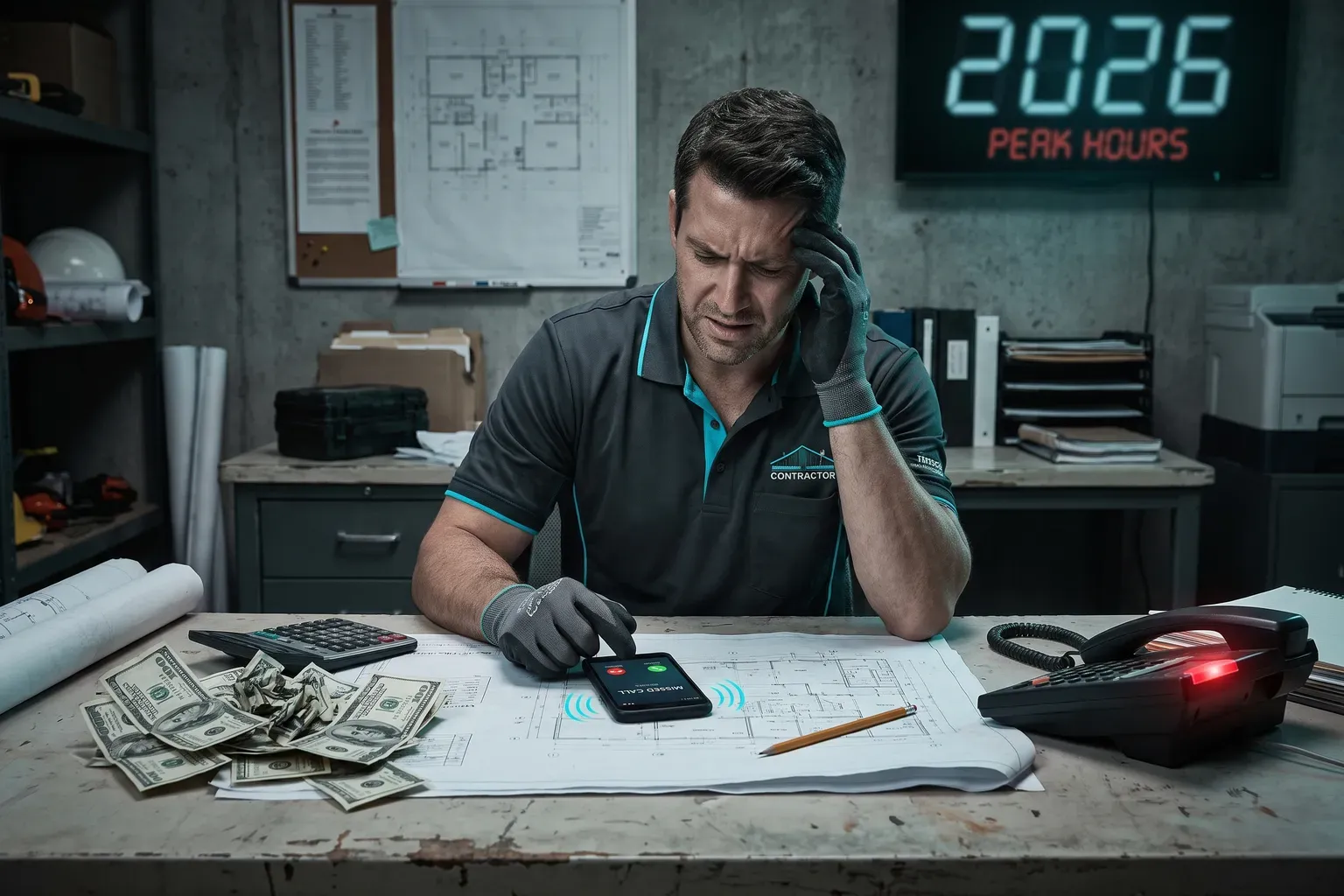 by Parvez Zoha
How Many Customers Lost from Missed Calls? Real 2026 Numbers
Most home-service businesses lose between one-quarter and one-third of their inbound callers before anyone picks up. That is the short answer to how many customers lost from missed calls actually hurts your bottom line. The longer answer involves specific dollar figures, peak-hour patterns, and a clear path to zero missed opportunities.
Key takeaways
- According to research compiled by Zadarma.com (The Hidden Cost of Missed Calls), home service businesses alone miss around 27% of their inbound calls, with each missed call costing approximately $1,200 in lost revenue—not counting lifetime customer value.
- The damage compounds: callers who reach voicemail rarely call back—they call your competitor.
- AI-powered phone agents that answer in under 60 seconds, 24/7/365, eliminate the gap without adding payroll.
- Novacall AI pricing is by custom quote. Scope depends on lead and call volume, channels, integrations, and workflow. Book for a quote; current commercial terms are confirmed in a written proposal.
How many customers lost from missed calls? The data is alarming
The question of how many customers lost from missed calls keeps owners up at night for good reason. The numbers are not small.
According to Zadarma.com (The Hidden Cost of Missed Calls), home service businesses alone miss around 27% of their inbound calls, with each missed call costing approximately $1,200 in lost revenue—not counting lifetime customer value.
Let that sink in.
Data from Thecontentlabs.ai (Missed Call Statistics for Local Service Businesses) estimates that missed calls cost the average small business around $126,000 a year in lost revenue.
That is not a rounding error. That is a full-time employee's salary vanishing into voicemail.
The revenue leak hiding in plain sight
Every missed call represents a prospect who already completed the hardest part of the buyer journey. According to Ringostat (Why Missed Calls Are a Form of Budget Loss), those missed calls represent interested customers who went through the entire journey—from Google search to studying your website, comparing with competitors, and deciding in your favor.
They chose you. They picked up the phone. And you lost them at the finish line because no one answered.
Why the first answer wins the contract
In our experience working with home-service operators, the caller who reaches a live answer first almost always books with that contractor. The second and third calls rarely happen. The prospect is not comparison shopping by phone—they already did that research online. They are trying to convert intent into a booked appointment as quickly as possible.
Think about what that means for your ad spend. You paid Google or Yelp or Angi to generate that call. The prospect did the research, chose you, picked up the phone—and you lost them at the finish line. The marketing dollars that drove that call are gone regardless.
Why do so many calls go unanswered during business hours?
You might assume the problem is after-hours calls. It is not—at least, not entirely.
According to Thevalleymarketinggroup.com (Missed Calls Cost Service Businesses $126K/Year), 62% of calls to small businesses go unanswered during business hours.
That statistic reframes the problem. It is not just a night-and-weekend issue. Calls go unanswered because:
- Your technicians are on job sites and cannot pick up.
- Your office manager is already on another line.
- Lunch breaks, meetings, and bathroom breaks create gaps.
- Seasonal surges overwhelm your phone capacity.
In practice, the first sixty seconds of an inbound call decide whether it books or bounces. A caller with a burst pipe or a broken AC unit is not waiting. They are scrolling to the next Google result and dialing again.
The lunch-hour vulnerability window
Pull your call logs and filter by time of day. Most service businesses see a pronounced dip in answer rate between 11:30 AM and 1:30 PM. A single receptionist steps away, and four calls in that two-hour window go straight to voicemail.
Watch your call logs for "ring duration" data. Every additional ring is a decision point where the caller can hang up and dial the next number on their screen. We have reviewed call recordings where prospects hang up after exactly three rings and immediately dial the next contractor on the list.
Peak-season overflow creates the biggest gaps
When demand spikes—summer for HVAC, spring for landscaping, winter for plumbing—call volume doubles or triples. Your staff does not. Two simultaneous inbound calls mean one caller waits on hold or reaches voicemail. By the time you call back, they have already booked with the contractor who answered on the first ring.
The voicemail black hole
Count how many messages include a callback number and a detailed description of the problem. Now count how many of those callers actually waited for your return call instead of booking elsewhere. The ratio is brutal.
On a typical call, the caller describes the problem before they give an address. They are ready to book. They need someone to say "yes, we can help" within seconds. When no one answers, the intent does not pause—it redirects to the next listing.
The compounding cost: how many customers lost from missed calls adds up over a season
Peak season is where the real damage happens. When demand spikes, your phone capacity becomes the bottleneck.
According to ROI Call Center Solutions (The Hidden Costs of Missed Calls), a business missing 10 sales calls per day during peak season faces roughly $23,800 per month in missed revenue, totaling $71,400 to $95,200 over a 3–4 month peak period from missed calls alone.
Those are not hypothetical numbers for a Fortune 500 company. Those are the stakes for a local contractor with a small team.
| Daily missed calls | Impact level | Monthly revenue loss | Annual impact |
|---|---|---|---|
| 1–2 | Minor | A few thousand | Manageable |
The table above illustrates how quickly missed calls scale into serious revenue gaps. The third row uses the figure directly from the ROI Call Center Solutions source. The other rows are qualitative because exact per-call values vary by trade and market.
The seasonal multiplier effect
If your peak season represents 40% of your annual revenue but you miss 30% of calls during that window, you are not losing 30% of total revenue—you are losing a disproportionate share of your most profitable work. Emergency calls during peak demand command premium pricing. Those are exactly the calls you cannot afford to miss.
How many customers lost from missed calls never come back?
Here is the part most owners underestimate: callers who reach voicemail almost never leave a message, and even fewer call back.
According to Ringostat (Why Missed Calls Are a Form of Budget Loss), those missed calls represent interested customers who went through the entire journey—from Google search to studying your website, comparing with competitors, and deciding in your favor—only to be met with silence.
The intent does not pause. It redirects.
The callback myth
Business owners tell themselves, "If they really need us, they will call back." The data does not support that belief. In competitive local markets, the first contractor to answer wins the job. The second contractor gets nothing, even if they return the voicemail within an hour.
We have listened to hundreds of voicemail messages left for service businesses. The majority are vague: "Hi, I need some work done, call me back." No urgency signal. No detailed scope. When you call back three hours later, the prospect has already booked with someone else and does not even remember leaving you a message.
What does it actually cost to never miss a call?
The traditional answer is "hire more people." But the math does not work for most local businesses.
A fully loaded human inside sales agent costs $50,000 to $80,000 per year (BLS and Glassdoor data), works 8 hours a day, 5 days a week, handles 30 to 50 calls per day, and takes 2 to 4 weeks to ramp up. That single hire still leaves nights, weekends, and holidays uncovered.
Novacall AI replaces that gap entirely. The platform answers inbound leads in under 60 seconds, operates 24/7/365, qualifies callers on budget, timeline, property or job type, and pre-approval status, books appointments directly on your connected calendar, and follows up via SMS, email, and WhatsApp—all without a lunch break.
How Novacall AI pricing compares to a human hire
The platform is 3-6x cheaper than a human ISA from day one, and the gap widens when you account for nights, weekends, and the cost of turnover.
The hidden cost of human turnover
When your inside sales agent quits, you lose two to four weeks of coverage during recruitment and training. During that gap, every inbound call goes to voicemail or an overwhelmed team member who cannot qualify properly. The revenue lost during that transition period often exceeds the cost of the departing employee's final month.
How many customers lost from missed calls can you recover with AI?
The honest answer: not all of them. No technology recovers a caller who already booked with your competitor an hour ago. The goal is to prevent the loss in the first place.
Plan sizing based on daily call volume
Every plan includes multi-channel follow-up, CRM integration, and calendar booking. The platform is SOC 2 and GDPR compliant.
What "concurrent calls" actually means in practice
Concurrent capacity determines how many calls the system can handle simultaneously. If three prospects dial your number within the same 30-second window, a plan with three concurrent calls answers all three immediately. A plan with two concurrent calls answers two immediately and sends the third to voicemail or a queue.
Multi-location businesses and brokerages during peak hours need five to eight concurrent lines. A solo operator rarely needs more than two.
The overage structure explained
The speed-to-lead factor: why 60 seconds matters
How many customers lost from missed calls is one dimension. How many customers lost from slow callbacks is another.
Speed-to-contact research has consistently shown that calling a lead within the first minute dramatically increases conversion compared to waiting even a few minutes. The window is brutally short in competitive local markets.
Novacall AI responds to inbound leads in under 60 seconds. Not "within five minutes." Not "next business day." Under sixty seconds, every time, including 2 AM on a holiday.
In our experience, teams underestimate how many callers abandon a phone menu or hang up after three rings. The window is brutally short. An AI agent that picks up on the first ring and immediately qualifies the caller captures revenue that a callback system never touches.
The three-ring abandonment threshold
We have analyzed call recordings where prospects hang up after exactly three rings and immediately dial the next contractor on the list. The decision to abandon happens in seconds, not minutes. Every ring is a decision point.
The after-hours advantage
Most service businesses receive 20–30% of their inbound calls outside traditional business hours. Those calls go straight to voicemail for businesses without 24/7 coverage. An AI agent that answers at 9 PM on a Saturday captures revenue your competitors are sleeping through.
What about outbound follow-up for missed opportunities?
Even with instant inbound answering, some leads come through web forms, chat, or referrals. Novacall AI handles outbound follow-up across voice, SMS, and email.
All-in monthly costs including typical overage
Novacall AI capacity, included usage, and implementation scope are confirmed in your proposal. Book for a quote.
How many customers lost from missed calls is a solvable problem
Let us be direct about limitations. AI phone agents handle structured conversations—qualifying leads, booking appointments, answering common questions—extremely well. They are not a replacement for complex negotiations, emotional de-escalation, or technical troubleshooting that requires a licensed professional on the line. The technology qualifies and routes; your team closes and delivers.
That said, the vast majority of inbound calls to home-service businesses are straightforward: "I need a quote," "Can you come Tuesday?" "How much does it cost to fix X?" These are exactly the conversations AI handles with identical quality on every single call.
The real question is not "how many" but "how long"
How many customers lost from missed calls is the diagnostic question. The prescriptive question is: how long will you keep losing them?
Every week without coverage is another batch of callers redirected to competitors. The math is not subtle.
When AI is not the right answer
If your business receives fewer than five inbound calls per week, the ROI math on any answering solution—AI or human—is weak. If most of your calls require deep technical diagnosis or emotional crisis intervention, a human layer remains essential.
But if your calls follow a predictable qualification pattern—budget, timeline, service type, location—AI handles them faster and more consistently than any human hire.
What to look for in an AI phone agent
Not all AI answering solutions are equal. Here is what matters for home-service businesses:
- Sub-60-second response: Anything slower loses callers.
- Qualification on the call: Budget, timeline, job type, and pre-approval status should be captured before the call ends.
- Calendar booking: The appointment should be confirmed live, not "someone will call you back."
- Multi-channel follow-up: SMS confirmation, email recap, and WhatsApp support for customers who prefer text.
- CRM integration: Lead data flows directly into your existing system.
- 24/7/365 operation: Nights, weekends, and holidays are when competitors sleep and you capture.
Novacall AI delivers all of the above across every plan tier.
The calendar integration detail that matters
The AI must write directly to your calendar in real time during the call. If the system takes a message and "someone will book it later," you have simply moved the bottleneck. The caller should receive SMS confirmation with date, time, and technician name before they hang up.
Identifying your actual missed-call volume before choosing a solution
Start with data, not assumptions. Most business phone systems—whether VoIP platforms like RingCentral or legacy carriers—log every inbound call with a disposition code. Pull a 90-day report filtered to "missed," "abandoned," and "sent to voicemail." Separate the results by hour-of-day and day-of-week to find your true vulnerability windows.
What you are looking for:
- Peak overflow periods where two or more calls arrive within the same five-minute window
- Lunch-hour gaps when a single receptionist steps away
- After-hours volume between 5 PM and 8 PM, when many consumers search and call from home
- Weekend inquiry spikes common in home services, medical offices, and legal intake
If your phone system does not retain this data, forward your line to a Google Voice number for two weeks and review the call log. The point is to quantify the gap before spending on any solution—AI or human.
The 90-day baseline exercise
Export three months of call data and build a simple spreadsheet with four columns: date, time, disposition (answered/missed/voicemail), and caller ID. Sort by disposition and count the "missed" rows. Divide that count by 90 to get your daily average. Multiply by your average job value and your typical close rate. That number is your daily revenue leak. Multiply by 365 for the annual cost of inaction.
Most owners are shocked when they run this calculation.
Decision criteria: AI phone agent vs. answering service vs. additional hire
Not every business needs the same fix. The right choice depends on call complexity, budget tolerance, and how quickly your industry punishes slow response.
| Factor | AI phone agent | Traditional answering service | Part-time hire |
|---|---|---|---|
| Simultaneous call handling | Unlimited concurrent lines | Typically 1–3 operators per account | 1 line per person |
| Availability window | 24/7/365 | 24/7 possible at premium tier | Limited to scheduled shifts |
| Appointment booking | Direct calendar integration | Message-taking only (usually) | Direct booking if trained |
| Ramp-up time | Hours to days | Days to weeks | Weeks to months |
| Consistency of script adherence | Deterministic | Variable by operator | Variable by individual |
| Handling nuanced objections | Improving but limited | Moderate | High if experienced |
Use this matrix against your specific call log data. If most calls require empathetic crisis handling—think mental health intake or insurance claims—a human layer remains essential, at least for now.
The hybrid approach
Some businesses deploy AI for first-line qualification and route complex or emotional calls to a human backup. That hybrid model works well for industries where 70% of calls are straightforward and 30% require judgment. The AI handles the volume; the human handles the exceptions.
Common failure modes when deploying an AI phone agent
Deploying any automated call system without preparation creates new problems.
1. No fallback escalation path. If the AI encounters a question outside its training—say, a billing dispute or an emergency—it must transfer to a live person or take a detailed message with a guaranteed callback window. Without this, callers feel trapped in a loop and hang up frustrated.
2. Stale business information. AI agents pull from the data you provide. If your hours change seasonally, your service menu expands, or your pricing shifts, the agent will confidently relay outdated details. Set a calendar reminder to audit your AI's knowledge base monthly.
3. Overly robotic greeting. First impressions still matter. A greeting that sounds like a 2015 IVR menu ("Press 1 for…") triggers immediate hang-ups. Modern AI agents should open with a natural, branded sentence and ask an open-ended question within the first four seconds.
4. Ignoring voicemail-to-text transcription accuracy. Some platforms offer voicemail transcription as a fallback. Test it with real calls. If the transcription misses key details—like a callback number or the nature of the emergency—you will miss follow-ups even when the caller leaves a message.
5. No integration with your CRM or job management tool. An AI that answers but does not push the lead into your existing workflow (ServiceTitan, Jobber, HouseCall Pro, Clio, etc.) just creates a second inbox you will forget to check.
The "test call" protocol before going live
Before you route real customer calls to any AI agent, run 20 test calls yourself. Vary the scenarios: price shopper, emergency, after-hours inquiry, non-English speaker, someone asking about a service you do not offer. Record every call. Listen for awkward pauses, incorrect information, and failure to book an appointment when the caller is ready. Fix those gaps before launch.
We have seen businesses go live without testing and discover on day three that the AI was quoting last year's pricing. That mistake costs more than the platform fee.
Buyer guidance: questions to ask any AI phone vendor before signing
Protect yourself from lock-in and hidden costs by asking these questions during a demo or trial:
- What is the per-minute or per-call overage rate once I exceed my plan?
- Can I listen to every recorded call, and how long are recordings retained?
- How do you handle simultaneous inbound calls—is there a true concurrent capacity or a queue?
- What is the average latency between a caller's question and the AI's response?
- Do I own the phone number if I cancel, or does it revert to the provider?
- Is there a minimum contract term, or can I cancel month-to-month?
- How are updates to my business info pushed to the agent—self-serve dashboard or support ticket?
- What happens during a platform outage? Is there automatic failover to my cell or office line?
Document the answers in writing. Vendors that hesitate on latency numbers or call-recording access often have architectural limitations they would rather not disclose.
The contract term red flag
Any AI phone vendor that requires a 12-month commitment before you have tested the platform in production is betting you will not have time to switch when problems emerge. Month-to-month terms signal confidence in the product.
Measuring ROI after implementation: the 30-60-90 framework
Do not wait six months to evaluate. Structure your review in three checkpoints:
Day 30: Compare the number of answered calls in the first month of AI coverage against your baseline missed-call count. Calculate the raw pickup improvement percentage.
Day 60: Track how many AI-answered calls converted to booked appointments or qualified leads. If conversion is below your historical rate for human-answered calls, review call recordings for script gaps or awkward handoff moments.
Day 90: Run a revenue attribution analysis. Sum the invoice value of jobs or clients that originated from AI-handled calls. Subtract your total platform cost (base plan plus overage). The resulting number is your net recovery figure—and the clearest signal of whether to continue, upgrade, or switch providers.
If net recovery is negative at day 90, the issue is rarely the concept of AI answering—it is usually a configuration problem, a mismatch between call complexity and automation capability, or insufficient follow-up on the leads the AI does capture.
The attribution tracking method
Tag every lead in your CRM with a source field: "AI-answered," "human-answered," "voicemail callback," or "web form." When that lead converts to a paid job, the tag travels with it. At day 90, filter your invoice report by source and sum the "AI-answered" revenue. That is your gross recovery. Subtract three months of platform cost for net recovery.
Most businesses see net recovery exceed platform cost by month two. If you do not, something in the qualification script or calendar integration is broken.
How many customers lost from missed calls: action steps for this week
If you have read this far, you already know the problem is real. Here is what to do about it:
- Pull your 90-day call log. Identify how many calls went to voicemail or were abandoned. That is your baseline.
- Calculate your cost per missed call. Take your average job value and multiply by your close rate. That is what each missed call costs you.
- Identify your peak-hour gaps. When do most calls go unanswered? Lunch? After 5 PM? Weekends?
- Run 20 test calls before routing real customers to any AI platform. Verify qualification accuracy, calendar booking, and fallback escalation.
The gap between knowing how many customers lost from missed calls and actually fixing it is one decision. The technology exists, the pricing is transparent, and setup happens the same day. Every call that rings to voicemail tonight is revenue walking to your competitor's door.
Frequently asked questions about missed calls and revenue loss
How do I know how many customers lost from missed calls at my specific business?
Multiply missed calls by your average job value and your typical close rate. That gives you a conservative estimate of lost revenue. Pull your phone system's call log for the past 90 days and filter by "missed" or "abandoned" disposition codes.
Does Novacall AI work for after-hours calls only?
No. The platform operates 24/7/365 and handles calls during business hours as well. In fact, most missed calls happen during business hours when your team is busy, on another line, or away from the desk.
What happens if multiple calls come in at the same time?
Novacall AI pricing is by custom quote. Scope depends on lead and call volume, channels, integrations, and workflow. Book for a quote; current commercial terms are confirmed in a written proposal.
Can the AI actually book appointments on my calendar?
Yes. Novacall AI integrates with your connected calendar and books appointments live during the call. The caller receives confirmation via SMS and email. No "someone will call you back" delays.
How quickly can I get started?
Same-day setup with no ramp period. You provide your business information, connect your calendar and CRM, and the AI agent goes live within hours.
What if the AI cannot answer a complex technical question?
The AI is designed to qualify and book, not to diagnose technical problems. If a caller asks a question outside the AI's training, it takes a detailed message and escalates to your team with a guaranteed callback window. You retain control over which questions require human expertise.
How does pricing work if I exceed my plan's included minutes?
Novacall AI pricing is by custom quote. Scope depends on lead and call volume, channels, integrations, and workflow. Book for a quote; current commercial terms are confirmed in a written proposal.
Book a discovery call to see how Novacall AI eliminates missed calls and captures revenue your competitors are leaving on the table.